.svg)

.svg)
24/7 Stock Trading Explained: Why It Changes Everything

For generations, stock markets have followed a familiar ritual: an opening bell in the morning, a closing bell in the afternoon, and silence overnight until the next trading day.
But a growing number of digital trading platforms are beginning to challenge that long-standing structure. Built on infrastructure originally designed for cryptocurrencies—which trade continuously—these platforms are experimenting with ways to bring 24/7 access to global equities, potentially reshaping how investors interact with stock markets.
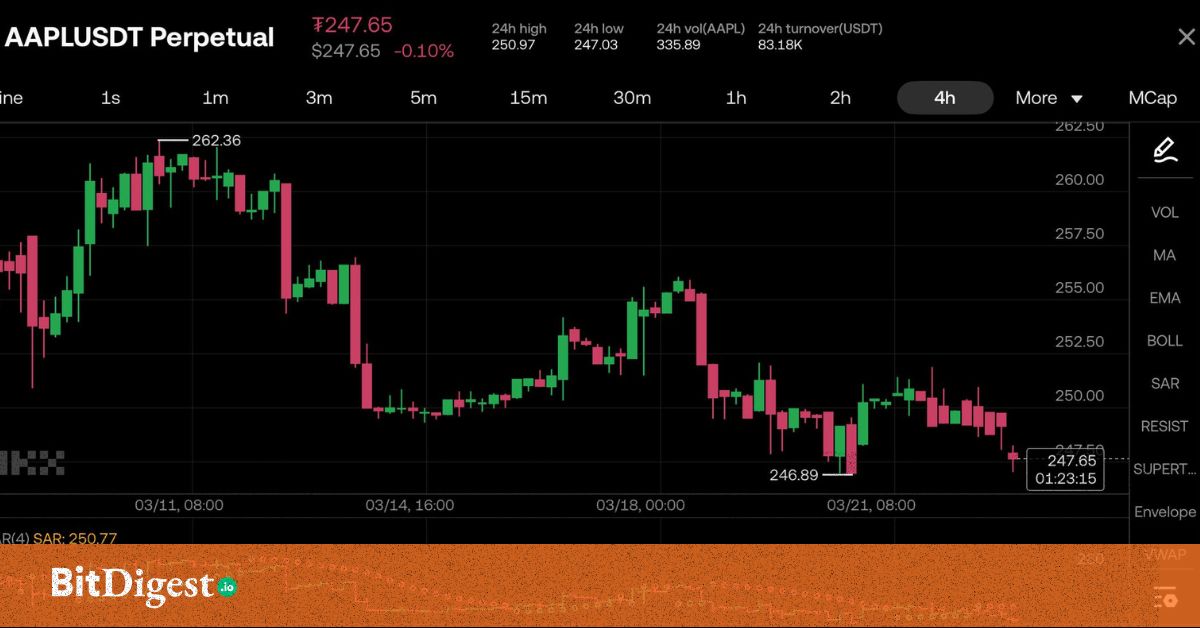
One prominent example comes from OKX, which recently introduced equity perpetual contracts tied to major U.S. companies and market indices. The products allow traders to gain exposure to stock price movements around the clock, removing the time constraints traditionally associated with exchanges like the New York Stock Exchange and Nasdaq.
Why Market Hours Exist in the First Place
Traditional stock exchanges operate within fixed trading windows largely due to historical and operational constraints.
Before electronic trading became dominant, exchanges required physical trading floors where brokers executed transactions manually. Even today, centralized clearing systems, settlement processes, and regulatory frameworks remain built around scheduled sessions.
As a result, U.S. equity markets typically operate from 9:30 a.m. to 4:00 p.m. Eastern Time, with limited extended-hours trading available before and after the main session. Weekends and public holidays remain closed entirely. This structure means investors often cannot react immediately to major events, such as geopolitical developments, corporate announcements, or economic data releases that occur outside trading hours.
A Model Inspired by Crypto Markets
Cryptocurrency markets operate differently. Digital asset exchanges never close, allowing traders to respond to news and market movements 24 hours a day, seven days a week. By adapting this infrastructure to stock-linked derivatives, platforms like OKX are attempting to apply the always-on model of crypto markets to traditional financial assets.
Equity perpetual contracts function similarly to perpetual futures widely used in cryptocurrency trading. Instead of owning actual shares, traders hold derivative positions that track the price movements of underlying companies or indices.
These instruments feature several distinctive characteristics:
- No expiration date, allowing positions to remain open indefinitely
- Funding rate mechanisms that keep derivative prices aligned with underlying market benchmarks
- Leverage options that amplify exposure to price movements
The contracts provide synthetic exposure to companies such as Tesla, Nvidia, Apple, and Amazon, along with index-linked products tied to major benchmarks.
Expanding Access Beyond Wall Street
Another potential advantage of continuous trading is broader global accessibility. Investors outside the United States often face inconvenient trading schedules when participating in American markets. For traders in Asia or Europe, U.S. market hours may fall late at night or early in the morning.
By allowing equity-linked derivatives to trade continuously, crypto-based platforms enable users across time zones to interact with U.S. equity markets without waiting for the opening bell in New York. Supporters argue that such systems could eventually help create a more globally synchronized financial marketplace, where investors respond to events in real time regardless of geography.
A New Phase of Financial Convergence
The emergence of 24/7 equity derivatives also reflects a broader trend in financial innovation: the gradual convergence of cryptocurrency infrastructure and traditional finance. Over the past several years, digital asset platforms have increasingly expanded beyond cryptocurrencies to offer exposure to traditional financial instruments, including commodities, interest rates, and equities.
This movement—often described as crypto–TradFi convergence—aims to replicate or integrate traditional financial products using blockchain-based trading systems. In this framework, equity perpetual contracts represent one pathway for bringing traditional financial exposure into the digital asset ecosystem without directly transferring stock ownership onto blockchain networks.
Opportunities and Risks
Despite their innovative structure, equity perpetual contracts come with important limitations. Because the products are derivatives rather than actual shares, traders do not receive dividends, shareholder voting rights, or ownership stakes in the companies they track.
As leveraged derivatives, they also expose traders to risks including: liquidation if prices move against a position, ongoing funding rate costs, and heightened volatility during major news events. Additionally, regulatory frameworks for synthetic equity products vary across jurisdictions and may continue evolving as financial authorities examine new market structures.
The Future of Market Hours
For now, 24/7 stock-linked derivatives remain an experimental development in global finance. Yet the concept highlights a broader question about the future of markets: should trading be bound by geographic time zones at all?
As digital infrastructure continues to transform financial systems, the opening and closing bells that once defined Wall Street’s daily rhythm may gradually become less central to how markets operate. In an increasingly interconnected financial world, the next generation of trading platforms may not wait for the market to open, they may simply keep it open all the time.
.svg) SHARE TO FACEBOOK
SHARE TO FACEBOOK SHARE TO TWITTER/X
 SHARE TO LINKEDIN
 SEND TO MAIL



.svg)


.svg)