.svg)

.svg)
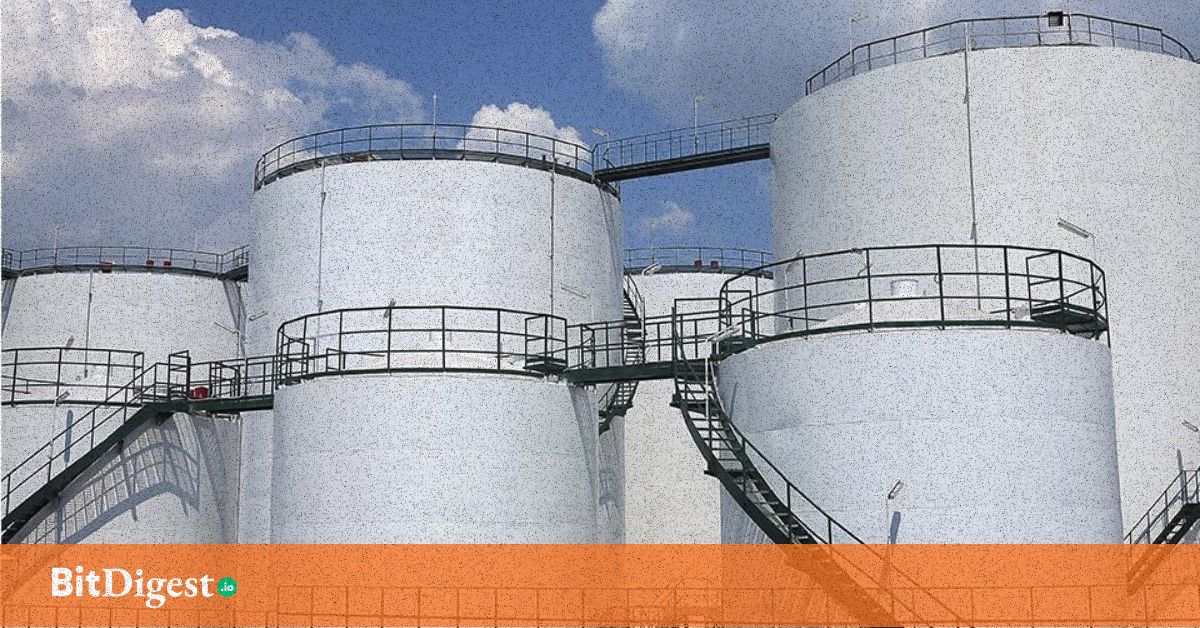
Limited Storage Caps Philippines’ Ability to Build Oil Reserves Amid Crisis

The Philippines cannot simply stockpile more fuel despite ongoing global supply disruptions, as limited storage capacity is emerging as a critical constraint in the country’s energy response. According to Sharon Garin, many storage facilities operated by private oil companies are already near full, restricting the ability to import additional supply even as the government seeks to secure energy stability.
Around 50 Days of Supply, But Little Room to Expand
The country currently holds an estimated 50 to 51 days of fuel supply, based on Department of Energy data from late March to early April. Breakdowns vary by product:
• Gasoline: roughly 53–59 days
• Diesel: around 46–47 days
• LPG: about 33 days (lowest buffer)
While these levels provide a short-term cushion, they are approaching the upper limits of national storage capacity. Unlike other countries, the Philippines does not maintain a government-owned strategic petroleum reserve, relying instead on inventories held by private firms.
Storage, Not Supply, Is the Immediate Bottleneck
Officials emphasize that the issue is no longer just about securing oil, but where to store it. Industry data shows that available tank space for additional imports is limited to just a few days’ worth of capacity in some cases. This means even if new supply is available, it cannot be fully accommodated without expanding infrastructure or drawing down existing inventories.
The constraint highlights a structural vulnerability in the country’s energy system, where logistics can limit response options during global disruptions.
Government Moves to Manage the Situation
Ferdinand Marcos Jr. has declared a national energy emergency, allowing faster procurement and coordinated response measures. Authorities have activated emergency funding and secured alternative fuel shipments from multiple sources, while also implementing conservation strategies such as reduced government fuel use and temporary allowances for lower-grade fuels in certain sectors. These steps are aimed at extending the current buffer and managing supply flow within existing storage limits.
Prices and Pressures Likely to Persist
Even with additional shipments and recent diplomatic efforts to secure safe passage for fuel imports, officials caution that prices are unlikely to ease quickly. Global benchmarks remain elevated, and supply chain lags—from shipping to refining—mean any relief will take time to reach local markets. As Secretary Garin noted, the effects of the crisis may outlast the conflict itself.
Long-Term Gap: No Strategic Reserve
The situation has renewed calls for the Philippines to establish a Strategic Petroleum Reserve (SPR), a government-managed system that could store larger volumes of crude for emergencies. However, such a project would require significant investment, land, and infrastructure, with estimates running into hundreds of billions of pesos for a 90-day reserve.
The Philippines has enough fuel, but limited capacity to store more. As global disruptions continue, the country’s energy challenge is no longer just securing supply, but managing the physical constraints of storage; underscoring the need for long-term infrastructure solutions.
.svg) SHARE TO FACEBOOK
SHARE TO FACEBOOK SHARE TO TWITTER/X
 SHARE TO LINKEDIN
 SEND TO MAIL




.svg)


.svg)