.svg)

.svg)
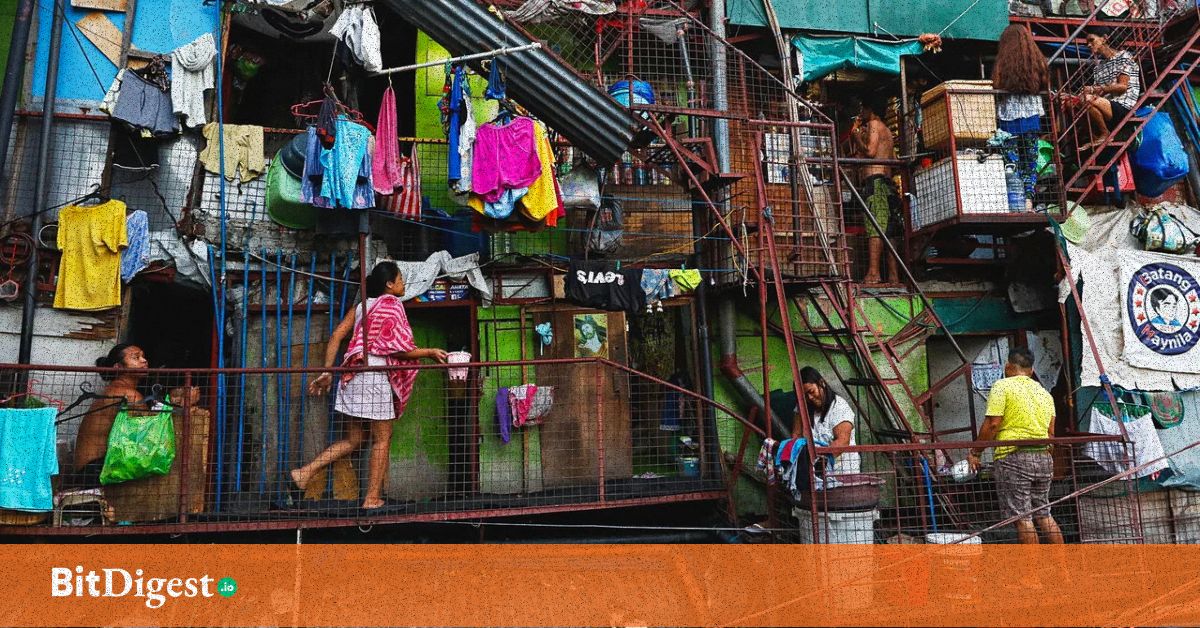
PH Leads Global Housing Struggle

More than half of Filipinos are struggling to afford housing, placing the Philippines at the top of a global ranking of housing-related financial stress, according to the latest data from the Gallup World Poll.
The 2025 survey found that 54% of respondents in the Philippines reported difficulty paying for rent, mortgages, or adequate shelter over the past year—higher than any other country measured in the dataset. The figures reflect lived financial strain rather than traditional price metrics, offering a clearer picture of how housing costs are affecting everyday households.
A Crisis Defined by Burden, Not Just Prices
Unlike typical rankings that focus on property values or price-to-income ratios, the Gallup data captures real-world hardship—whether people can actually afford to live where they are.
Housing stress is not highest in wealthy cities like New York or London, but in emerging economies across Asia. Countries trailing the Philippines include Sri Lanka at around 52%, Thailand at roughly 40%, and India in the mid-30% range. By contrast, reported housing difficulty in the United States falls between 11% and 18%, while Britain sits below 10%. In high-income economies, housing concerns often center on affordability relative to expectations. In emerging markets, the issue is more immediate—whether households can meet basic housing needs at all.
Nowhere is this strain more visible than in Metro Manila, where affordability metrics remain among the most severe in the region.
Recent data shows:
- Condominium prices reaching nearly 20 times the median annual household income
- Townhouses climbing above 30 times median income
- Average rents consuming more than 100% of median monthly income
These figures far exceed the widely accepted affordability benchmark of 30%, underscoring how far out of reach formal housing has become for many urban residents. For many families, the result is a difficult trade-off: live closer to work at unaffordable prices, or move farther out and absorb long, costly commutes.
Structural Pressures Driving the Trend
The Philippines’ housing strain is shaped by a combination of long-standing structural challenges. Rapid urbanization continues to push more people into already dense cities, while the supply of affordable housing has struggled to keep pace. At the same time, developers have largely concentrated on higher-margin projects, leaving a persistent gap in mid-income and socialized housing.
Land constraints, regulatory bottlenecks, and infrastructure limitations further complicate efforts to expand supply at scale. The result is a market where demand remains strong. but accessible options remain limited.
Beyond Housing: A Broader Economic Signal
Housing stress is not an isolated issue. Data from Gallup links it to broader outcomes, including lower life satisfaction, increased financial anxiety, and reduced perceptions of economic freedom.
In the Philippine context, rising housing costs ripple outward; affecting transportation spending, food budgets, and overall household stability. It also reinforces inequality, as those unable to access formal housing are pushed into informal settlements or precarious living arrangements.
Analysts consistently point to one core solution: increase the supply of affordable and mid-tier housing. But doing so will require coordinated action; spanning policy reform, infrastructure investment, and stronger incentives for developers to build beyond the luxury segment. For now, the data underscores a reality many Filipinos already feel. the challenge is no longer just finding a home, but being able to afford one at all.
The Philippines’ position at the top of global housing stress rankings reflects more than rising prices, it reflects a growing gap between incomes and the cost of living. And until that gap narrows, housing will remain one of the most pressing economic pressures facing Filipino households today.
.svg) SHARE TO FACEBOOK
SHARE TO FACEBOOK SHARE TO TWITTER/X
 SHARE TO LINKEDIN
 SEND TO MAIL




.svg)


.svg)