.svg)

.svg)
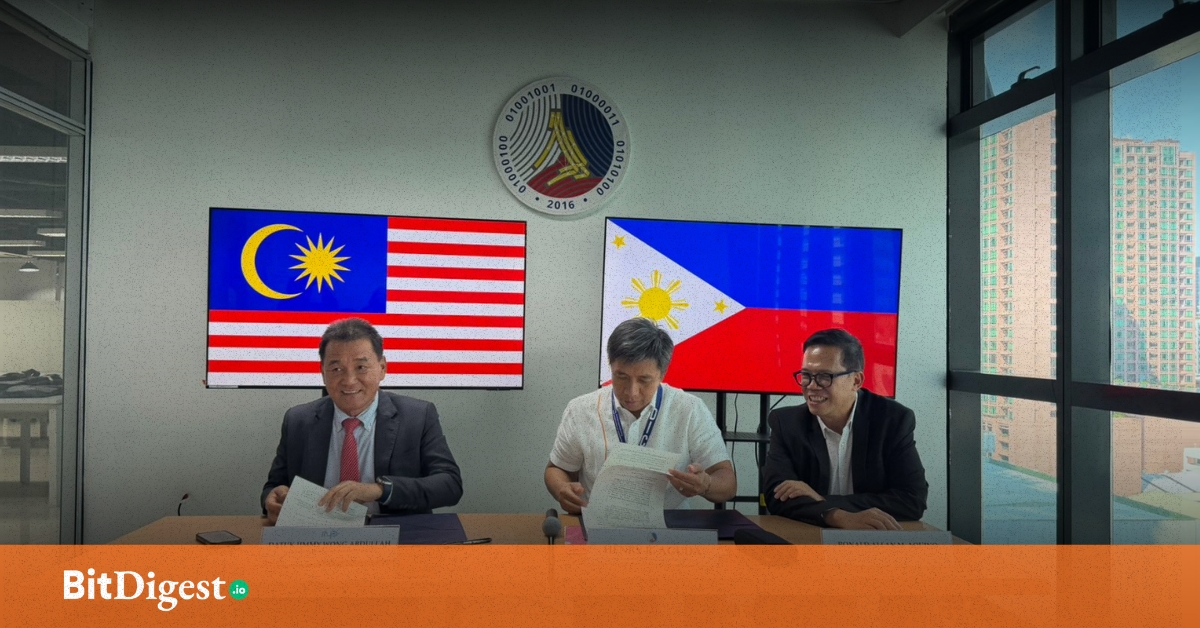
Philippines Partners With Malaysia’s Zetrix on National Blockchain Infrastructure

The Philippine Department of Information and Communications Technology (DICT) has signed a memorandum of understanding (MoU) with Malaysia’s Zetrix AI Berhad to use Zetrix’s Layer-1 blockchain as the foundation for the country’s planned national public blockchain infrastructure. Announced in early July, the partnership aims to support secure digital identity, government-issued digital credentials, and cross-border verification between the Philippines and Malaysia as both countries deepen regional digital cooperation.
The agreement makes the Philippines the second country after Malaysia to adopt Zetrix as the underlying protocol for sovereign-grade public blockchain infrastructure, expanding efforts to build trusted digital services that can operate across borders.
Building the Foundation for Digital Public Infrastructure
As governments continue to digitize public services, verifying identities and government-issued credentials across different agencies—and eventually across borders—has become an increasingly important challenge.
Under the partnership, Zetrix’s Layer-1 blockchain will serve as the core protocol for the Philippines’ planned national public blockchain infrastructure. The initiative is expected to support the issuance, authentication, and verification of government-issued digital credentials while providing a shared platform for secure digital interactions.
The collaboration also places early emphasis on interoperability between the national digital identity systems of the Philippines and Malaysia, allowing trusted digital credentials to be recognized across jurisdictions.
Beyond Blockchain: A Platform for Trusted Digital Services
While blockchain technology often draws attention for its role in cryptocurrencies, the DICT initiative is focused on digital public infrastructure.
The planned national blockchain is intended to support practical government services, including digital identity, credential verification, document authentication, and trade facilitation.
Officials also envision the infrastructure supporting tamper-evident records that remain verifiable by citizens, businesses, government agencies, and, eventually, AI-powered digital systems.
According to DICT Secretary Henry Aguda, the broader objective is to simplify trust across government systems.
“The initiative is about making trust portable across systems and borders. Through this collaboration, we can make the verification of government-issued credentials more secure and efficient across systems. More importantly, it helps remove unnecessary friction so citizens can access services faster and with greater confidence wherever they are.”
Why Zetrix?
Zetrix already serves as the foundation of Malaysia’s National Blockchain Infrastructure, which became operational in 2025 to support government and enterprise applications.
The company has also maintained a presence in the Philippines for nearly a decade through government partnerships involving agencies such as the Bureau of Internal Revenue (BIR), National Bureau of Investigation (NBI), Securities and Exchange Commission (SEC), Philippine Ports Authority (PPA), and the Bureau of Fisheries and Aquatic Resources (BFAR). More recently, it expanded its digital payment services with additional government agencies.
That existing experience in both countries helped position Zetrix as the technology partner for the Philippines’ next phase of blockchain-enabled public infrastructure.
Strengthening Regional Digital Cooperation
Beyond domestic government services, the partnership reflects a broader push toward regional interoperability.
One of its initial priorities is enabling secure cross-border verification of digital identities and government-issued credentials between the Philippines and Malaysia. The initiative also seeks to improve trade facilitation by allowing trusted digital records to move more seamlessly across participating jurisdictions.
For Zetrix AI Group Managing Director TS Wong, the agreement represents another step toward a more integrated regional digital ecosystem.
“We are grateful for the confidence placed in us by the Government of the Philippines for Zetrix to be the prime mover in leading the Web3 revolution for the Filipino people. This milestone marks another important step forward in the realisation of our vision of bringing countries in the region onto a common integrated ecosystem.”
A Broader Digital Transformation
The partnership builds on the Philippines’ broader digital transformation agenda, which has increasingly explored blockchain technology beyond financial applications.
Recent initiatives have included blockchain-based transparency efforts for public records and government processes. The planned national public blockchain expands that direction by focusing on trusted digital infrastructure capable of supporting government services, digital identities, and cross-border cooperation.
While implementation details are expected to develop over time, the agreement signals the government’s intention to move from isolated blockchain initiatives toward a national framework designed to underpin future digital public services, both within the Philippines and across the ASEAN region.
.svg) SHARE TO FACEBOOK
SHARE TO FACEBOOK SHARE TO TWITTER/X
 SHARE TO LINKEDIN
 SEND TO MAIL



.svg)


.svg)