.svg)

.svg)
The Architecture of Integration: Crypto Transparency Meets Bank Custody

New TradFi and Web3 framework links tokenized U.S. Treasuries with trading infrastructure, allowing institutions to deploy capital across markets without giving up custody, yield, or verifiability.
As tokenized assets move deeper into institutional use, OKX has rolled out a new framework that lets firms deploy U.S. Treasury-backed tokens as collateral on its platform without transferring them out of regulated bank custody.
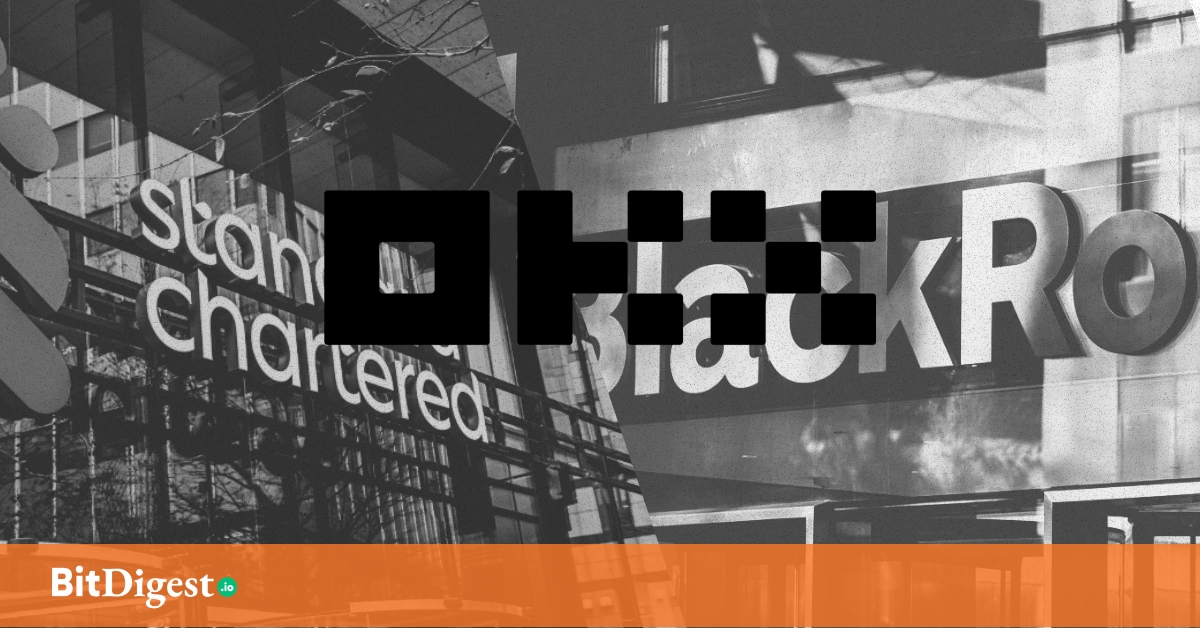
The system connects two distinct layers of financial infrastructure. On one side is OKX's crypto platform, where customer assets are verified through monthly Proof of Reserves reports using zk-STARK technology. On the other is an institutional track built around BlackRock's BUIDL tokenized Treasury fund, with assets held in segregated custody at Standard Chartered.
The two operate independently but are designed to work in coordination. The framework does not combine crypto holdings with tokenized real-world assets; each remains within its own structure, with crypto assets validated through public cryptographic proofs and tokenized Treasuries held under regulated bank custody. But it changes how both can be used. Institutions can keep assets within the banking system while using their value as collateral for trading activity on OKX, reducing the need to transfer funds between custodians and exchanges, a friction point in institutional trading.
Rethinking Collateral Movement
In traditional markets, collateral typically has to be moved to the venue where it is deployed, often across multiple intermediaries. This model shifts that assumption. Rather than relocating assets, the framework enables their value to be recognized across systems in near real time, replacing physical movement with interoperability.
Parallel Safeguards
The structure preserves two different approaches to trust without forcing either to compromise. Crypto markets continue to rely on verifiable, on-chain transparency. Institutions continue to rely on regulated custody and asset segregation. Instead of forcing convergence, the framework allows each system to operate under its own standards while linking their functionality.
A Structural Direction, Not Just a Product
The approach reflects a broader shift as tokenized real-world assets gain traction, particularly those tied to government securities. Its significance lies in addressing two persistent constraints at once: the need for transparent verification in crypto markets, and the need for institutional-grade protections in traditional finance. By allowing both to operate simultaneously, the model suggests a path forward where integration does not require compromise.
Whether it scales beyond early institutional adoption remains uncertain. But it outlines a structure that could influence how financial infrastructure evolves; less as a single unified system, and more as connected layers with distinct roles.
.svg) SHARE TO FACEBOOK
SHARE TO FACEBOOK SHARE TO TWITTER/X
 SHARE TO LINKEDIN
 SEND TO MAIL


.svg)


.svg)