.svg)

.svg)
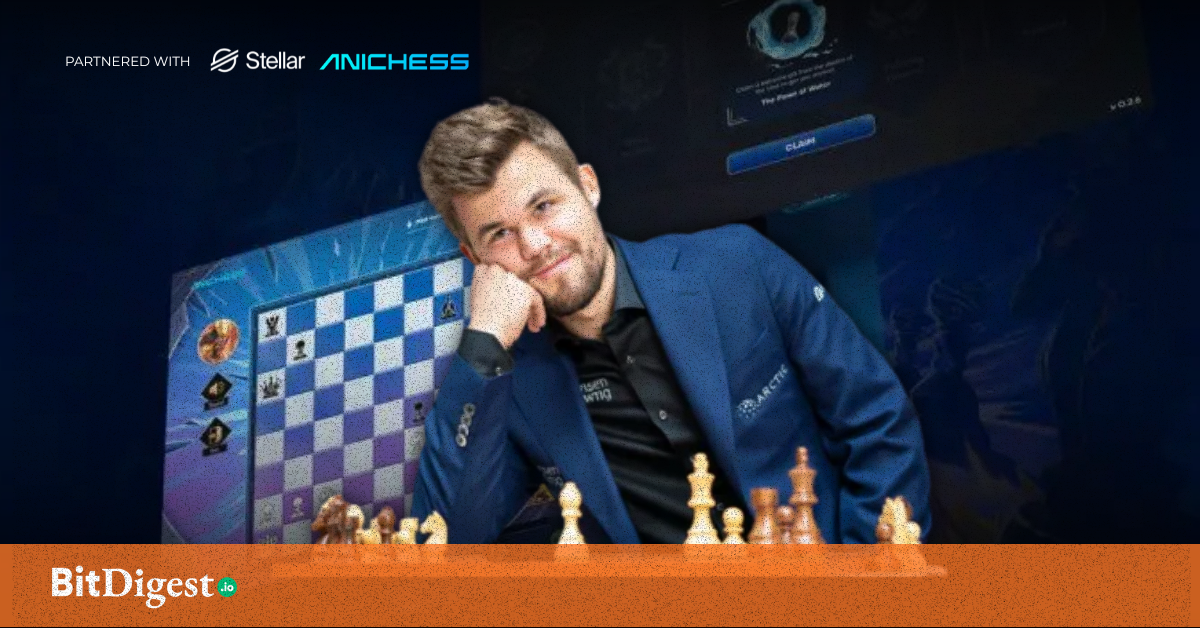
The Only Web3 Game Backed by the World Chess Champion

In an industry where celebrity endorsements usually feel transactional, Anichess stands out. The world’s top chess player, Magnus Carlsen, isn’t just lending his name to a Web3 game, he’s actually playing it. In a space crowded with overpromised blockchain projects, that difference is everything.
Carlsen’s involvement signals something rare: a Web3 game compelling enough for the GOAT to play on its own merits. Not because of a token, not because of a sponsorship tie-in, but because the gameplay itself is worth his time. For a field still fighting the stereotype of “ponzi with extra steps,” that kind of signal is more powerful than any whitepaper.
A New Chapter for a Centuries-Old Game
Chess has already lived several lives, from wooden boards to online platforms to engines and AI training tools. Anichess adds a layer no previous platform has attempted at scale: blockchain-powered gameplay with spell mechanics, narrative progression, and persistent onchain identity.
Traditional chess players have famously resisted change. Even minor tweaks to time controls or formats can trigger months of debate. Yet Anichess manages to blend innovation with familiarity, offering a Chess.com-level experience while layering in daily puzzles, unlockable abilities, and long-form strategy that feels fresh without trampling on the core logic of the game.
Carlsen’s presence gives the experiment a kind of permission. If the best player alive embraces this hybrid format, it becomes harder to dismiss it as a gimmick. It starts to look less like “polluting chess with crypto” and more like the next step in how chess adapts to a world where everything—sport, media, ownership—is becoming more interactive and programmable.
Zoomed out, Anichess is less about “chess with spells” and more about a test case: can you evolve a cultural classic without breaking the social contract that made it timeless in the first place?
Most Web3 games market themselves through rewards, emissions, and tokens. The pitch starts with APR and only later, maybe, gets to why the game is fun. Anichess does the opposite. It pushes the Web3 layer into the background. No mandatory wallet on day one, no crash course on gas, no “connect to see anything” gate.
Players arrive for the puzzles, the streaks, the spell-driven tactics and the strategic depth, not for speculation. The chain is doing useful work under the hood (ownership, progression, future interoperability), but it’s not shoved in the user’s face as the main attraction.
That’s why Magnus' playing matters so much. His engagement doesn’t just boost Anichess; it reframes it. This stops being “a crypto project that happens to use chess art” and becomes “a serious evolution of online chess that happens to use crypto rails.”
And that’s a much bigger idea: it suggests the path to mainstream Web3 gaming isn’t louder tokenomics, it’s games so compelling that players don’t care how they’re powered until later.
A Signal to the Chess World and to Web3
Anichess doesn’t need hype. It has something stronger: trust from the one player whose opinion quietly influences an entire global community.
For the chess world, Carlsen’s participation signals that hybrid formats—variant rules, spells, new win conditions—aren’t just side shows for casuals. They can be legitimate sandboxes for high-level strategy. His presence tells serious players, streamers, and organizers: you’re allowed to take this seriously.
For Web3, the signal is even broader. If you’re searching for what the first truly mainstream onchain game might look like, Anichess is an early, concrete answer. It doesn’t scream decentralization. It doesn’t lead with token tickers. It starts with a board, a twist, and a reason to care, and only then seamlessly reveals that the infrastructure underneath is programmable, composable, and onchain.
In other words: the milestone isn’t “the first Web3 game with a world champion attached.” It’s “the first Web3 game where a world champion shows up because the game, on its own, deserves it.” That’s the bar future onchain titles will have to clear.
.svg) SHARE TO FACEBOOK
SHARE TO FACEBOOK SHARE TO TWITTER/X
 SHARE TO LINKEDIN
 SEND TO MAIL



.svg)


.svg)