.svg)

.svg)
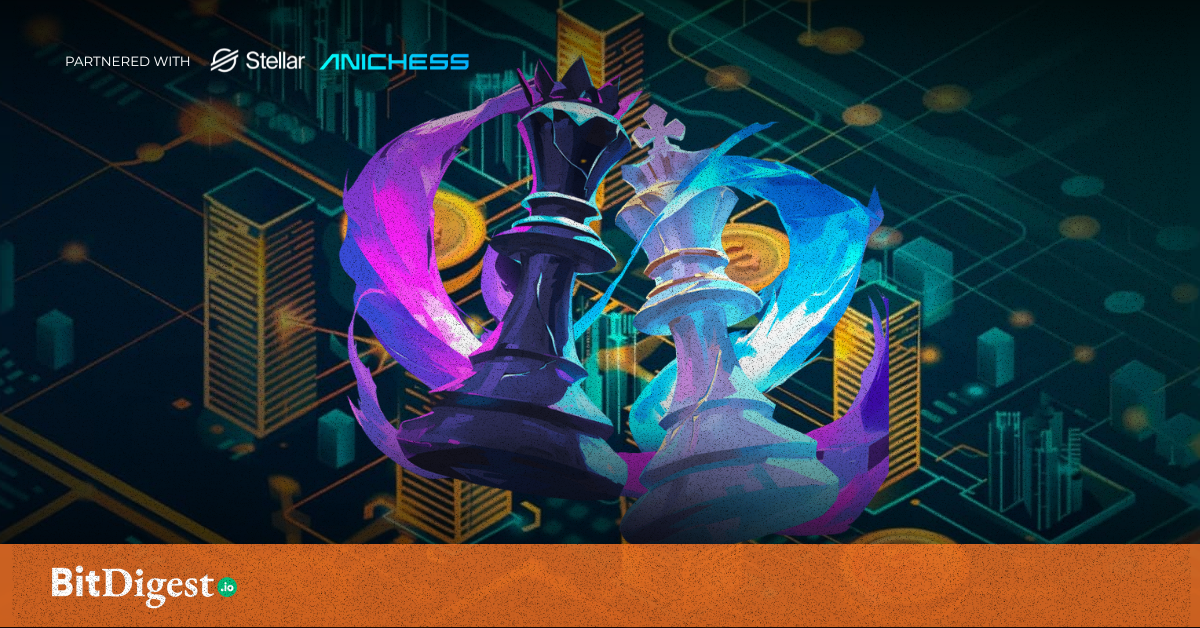
After Play-to-Earn, What Makes Anichess Exceptional?

On a weekday evening in Quezon City, Mark (not his real name) still keeps the icons of a game he no longer plays hidden on his phone.
During the lockdowns, that play-to-earn title felt like a lifeline. Between his own grind and a handful of “scholars” back home, he says he was briefly making more than a BPO salary. Then the rewards token collapsed, payouts shrank, bridges got hacked, treasuries drained, and he realised just how little control he had. He cashed out what he could and went back to a regular job.
He never wiped his wallets. One day, a link from an X thread pulled his attention into something new: a spell-powered chess game called Anichess, backed by Animoca Brands, built with Chess.com, and endorsed by world champion Magnus Carlsen. It now has a token, $CHECK, but the pitch is different—“play-for-skill,” not “play-to-earn.”
For players like Mark, the question isn’t whether the game looks cool. It’s simpler: is this actually different from the last cycle, or just a better-produced version of the same trap?
The last play-to-earn cycle: income built on emissions
To see why a project like Anichess is read skeptically in Southeast Asia, it helps to recall what the last big play-to-earn wave looked like from the ground.
Across 2020–2022, several Web3 games built around NFTs and reward tokens attracted millions of daily users globally, with a striking concentration in countries like the Philippines. Some titles generated revenues in the hundreds of millions to low billions of dollars at their peak, as players bred characters, farmed tokens, and joined “scholarship” programs run by guilds and managers. For a while, the pitch that you could “earn while playing” did not feel entirely theoretical.
Underneath, however, most of these economies rested on a similar structure: heavy token issuance plus constant inflows from new or more heavily invested participants. When the broader crypto market turned, the weaknesses became obvious. Rewards tokens tied to gameplay lost more than 90–99 percent of their value in some cases. Major infrastructure components—bridges and sidechains—proved to be high-value targets, resulting in nine-figure hacks that undermined confidence.
The human fallout was documented in follow-up reporting: players in the Philippines and elsewhere who had treated these games as primary income sources ended up with sharply reduced earnings or debts, and exited disillusioned. By 2023, “play-to-earn” had shifted from marketing hook to cautionary label.
That is the backdrop against which Anichess is proposing a new kind of tokenized game.
Enter Anichess: spell-chess with big-name partners
Through immediate observation, Anichess positions itself distant from the hyper-financialized titles of the last cycle. It is built around chess rather than creature breeding or idle loops, with a dark, stylized board layered with spell icons and animated effects. Underneath the aesthetic, however, the core ambition is recognizable: take a well-understood game, add new mechanics and tokenized incentives, and see whether a durable player economy can be built around it.
Anichess is a free-to-play Web3 chess title developed by Animoca Brands in partnership with Chess.com, the world’s largest online chess platform. A January 2025 announcement from Animoca reported that Anichess had reached around 100,000 monthly active users in December 2024, roughly three months after its public alpha launch in October. Later materials associated with its token ecosystem describe Anichess and related projects as surpassing one million players as the “Checkmate” network expanded.
The game supports casual quick matches, ranked play with a rating system, AI practice at multiple difficulty levels, and private friend matches. Whatever one thinks of the spell system aesthetically, the loop is clearly skill-based: your decisions and understanding of positions materially affect outcomes.
While design alone does not guarantee a healthier economy. It does, however, give Anichess a very different starting point than one-click farming games. The more difficult questions show up once you look at its token.
$CHECK and the “play-for-skill” pitch
In November 2025, Animoca and the Checkmate Foundation announced that Anichess would integrate $CHECK as its native token. In official materials and third-party explainers, $CHECK is described as the “strategy token” for a wider ecosystem of games, educational tools, and creation platforms.
On paper, the tokenomics look like this:
- Total supply: 1,000,000,000 CHECK.
- Community and ecosystem allocation: Just over 59% of supply is allocated to “growth of the community and ecosystem,” including player rewards, tournaments, and funding for contributors.
- Use cases: tournament entry, staking to enhance progression or unlock additional features, in-game purchases (cosmetics, collectibles, spell-related content), participation in governance, and cross-game utility within the Checkmate ecosystem.
The core claim is that distribution will be performance-oriented. Instead of simply rewarding time spent, the system uses M8 points—earned through matches, quests, and ecosystem activities—as a basis for allocating CHECK and other perks. These M8 points are tracked on-chain and presented as a way to tie emissions to “skill, creativity, and contribution” rather than to raw click volume.
In principle, this is a wise direct response to the flaws exposed by earlier play-to-earn models: it attempts to limit pure farming and align rewards more tightly with meaningful engagement.
What’s meaningfully new and what isn’t
Anichess makes itself exceptional by building its foundation away from the pitfalls and tendency of Ponzinomics. A big chunk of supply is routed through gameplay and ecosystem programs, M8 is meant to reward performance and contribution, and governance is framed as a way for players to help steer new modes and ideas. All of that points in a healthier direction than “click button, print token.”
Still, some nuance still exists. Some things live outside the framework itself. $CHECK is still a tradable token. Some people will always come in earlier or with more capital. Some will treat it as an investment, others as a tip jar, others as a scoreboard. No amount of clever tokenomics can stop someone from overexposing themselves in a bull market, or from being disappointed when prices move for reasons that have nothing to do with Anichess.
The same goes for “skill-based” rewards and governance. The team can do its best to measure more than raw grind, and to give active players a voice. Players, in turn, will decide how seriously they take that—whether they see $CHECK as a bonus layered on top of a game they already enjoy, or as a quasi-salary they expect to rely on. However, that’s no longer a design question, but it’s a personal one.
In that sense, Anichess and the Checkmate ecosystem can set better defaults—game-first, more thoughtful metrics, clearer expectations—but they can’t choose how individual people relate to the token. The line between “fun with upside” and “financial commitment” is ultimately drawn by each player, not by the whitepaper.
How players in Southeast Asia may evaluate it
For a lot of players who’ve already lived through one full play-to-earn boom and bust, the most pressing concern is much simpler and straightforward than “what are the tokenomics?”
The real question may just be ‘how much can a player trust the game?’
This is where Anichess has innate advantage over most onchain experiments. It’s built on top of chess—a game with centuries-old, well-understood mechanics and public performance metrics. Everyone can look at a game and see what happened. Good and bad moves are visible. Rating systems like Elo and Glicko aren’t proprietary formulas; they’re open, widely used, and relatively hard to quietly rig without the community noticing.
That anchoring matters. In many earlier play-to-earn setups, the “game” layer itself was loose and opaque. Developers could tweak drop rates, quest payouts, or hidden scoring rules in the background, and players would only feel the impact weeks later as their earnings suddenly changed. In Anichess, you can’t secretly redefine how a bishop moves or what checkmate means without breaking the entire premise. Even the spell layer sits on top of clearly defined chess rules and openly watched ladders.
None of this makes Anichess immune to bad token decisions or awkward balance patches. $CHECK emissions, staking terms, or spell tweaks can still be handled well or poorly. But because the core of the experience is anchored in a stable, shared ruleset—piece movement, visible game histories, transparent ratings—there is far less room for invisible levers and surprise nerfs. Any major change has to show up where everyone can see it: on the board and in the games themselves.
.svg) SHARE TO FACEBOOK
SHARE TO FACEBOOK SHARE TO TWITTER/X
 SHARE TO LINKEDIN
 SEND TO MAIL



.svg)


.svg)