.svg)

.svg)
CeDeFi Emerges as the Bridge for Trading Tokenized Real-World Assets

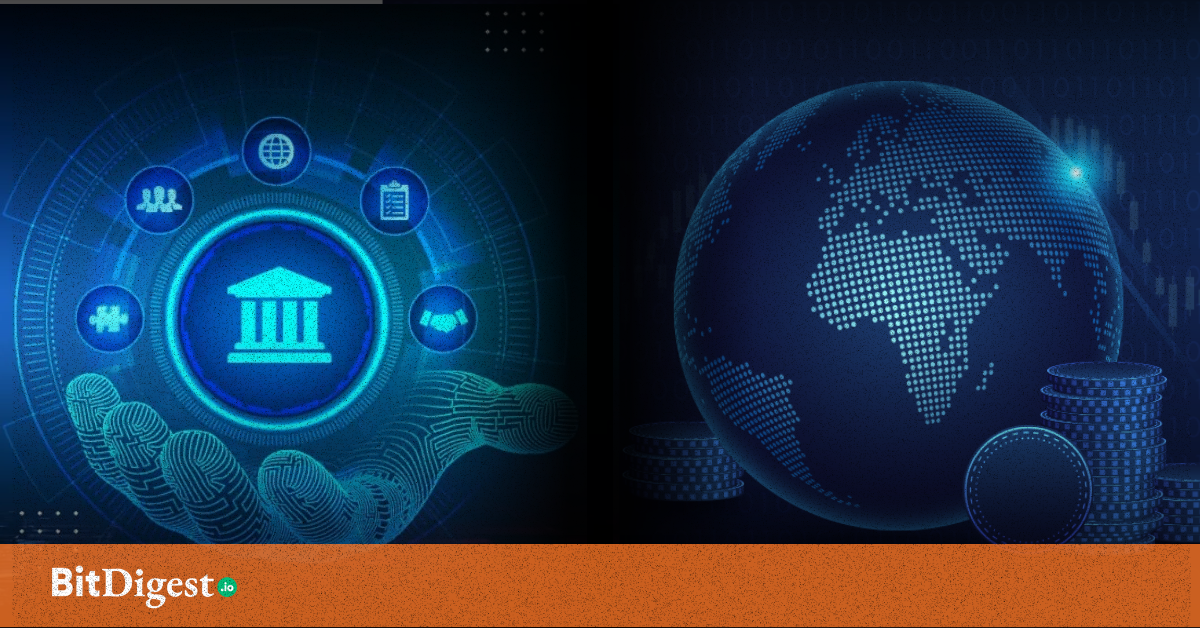
By early 2026, one of the clearest shifts in crypto is no longer about memecoins or speculative tokens, but about something far more familiar: real-world assets. From U.S. government bonds and gold to real estate and private credit, traditional financial instruments are increasingly being “tokenized” and made tradable on blockchains, promising faster settlement, 24/7 markets, and access in smaller, more flexible amounts.
The idea is simple: turn slow, paperwork-heavy assets into digital tokens that can move as easily as cryptocurrencies. The execution, however, has often been anything but simple. Using decentralized finance typically requires managing wallets, paying unpredictable gas fees, bridging funds across networks, and navigating a maze of applications. That complexity has kept much of the real-world asset (RWA) boom out of reach for everyday users.
Some platforms are now trying to close that gap. Earlier this month, OKX expanded its CeDeFi offering to support Ethereum and Arbitrum, two of the most important networks for tokenized assets today. The move reflects a broader industry effort to make onchain access to real-world assets feel less like a technical exercise and more like a familiar trading experience.
What “Real-World Assets” Actually Mean
Real-world.compiler assets, or RWAs, are exactly what the name suggests: representations of things that exist outside crypto—such as bonds, commodities, property, or loans—issued as blockchain tokens. Instead of needing millions of dollars and specialized brokers to buy into these markets, investors can purchase small fractions, trade them around the clock, or use them within onchain financial applications. A slice of a Treasury fund or a fraction of a gold bar can, in practice, be handled much like a regular digital asset.
Why RWAs Are Gaining Momentum Now
This timing is not accidental. High interest rates have renewed interest in yield-bearing instruments like government bonds, while gold and commodities have returned to the spotlight as hedges against economic uncertainty. At the same time, large institutions and asset managers have begun experimenting with putting these instruments onchain, pushing the tokenized asset market into the tens of billions of dollars in value.
The challenge has been usability. While blockchains can handle these assets, the user experience has remained fragmented. Traders often have to juggle multiple wallets, convert tokens just to pay network fees, and bridge assets between chains before they can even place a trade. For newcomers, the learning curve can be steep enough to outweigh the benefits.
The CeDeFi Approach: Blending Simplicity With Onchain Settlement
That is where the so-called “CeDeFi” model comes in, a hybrid approach that blends centralized exchange convenience with decentralized, onchain execution. OKX’s CeDeFi expansion to Ethereum and Arbitrum is one example of how this is being implemented. Ethereum remains the main hub for tokenized assets, hosting a large share of tokenized funds, commodities, and credit products, while Arbitrum offers a faster and cheaper execution layer for high-volume activity. By connecting to both, platforms can offer access to these markets without requiring users to manage the underlying technical steps themselves.
In practical terms, this means users can trade tokenized assets from a single account balance, without manually setting up wallets, worrying about gas fees, or moving funds across chains. Trades still settle onchain and remain self-custodied, but much of the operational friction is abstracted away. For many, that difference could determine whether RWAs remain a niche product or become a mainstream part of digital portfolios.
The menu of tokenized assets is also expanding quickly. On Ethereum and its scaling networks, investors can already find tokenized U.S. Treasuries that function like digital money market funds, gold-backed tokens representing vaulted bullion, fractionalized real estate shares, and private credit instruments tied to real-world borrowers. In simple terms, these products aim to make assets that were once slow, expensive, or exclusive easier to access and easier to move.
For investors outside major financial centers, this shift could be especially meaningful. Global, 24/7 access removes many of the time-zone and banking frictions that traditionally make it harder to participate in international markets. Fractional ownership lowers the entry barrier, allowing portfolios to mix crypto assets with yield-bearing or defensive instruments that were once reserved for institutions.
A Broader Shift in Crypto’s Role
Zooming out, the rise of RWAs signals a broader change in crypto’s role. After years dominated by speculation and trading infrastructure, the industry is increasingly focused on becoming a settlement layer for real economic activity. Tokenization is less about creating new kinds of assets and more about modernizing how existing ones move, trade, and integrate into digital systems.
That does not mean the risks disappear. Tokenized assets still fluctuate with real-world markets, smart contract vulnerabilities remain a concern, and regulatory frameworks continue to evolve. These products are not substitutes for cash or guaranteed returns, and they require the same level of risk awareness as any financial instrument.
Still, the direction of travel is clear. As access improves and complexity is reduced, real-world assets onchain are moving from an experimental corner of crypto toward something closer to everyday financial infrastructure. Platforms like OKX, by using a hybrid CeDeFi approach, are positioning themselves as gateways to that transition—less by changing what assets are, and more by changing how easily people can use them.
In that sense, the story of RWAs in 2026 is not just about putting traditional finance on blockchains. It is about whether the tools around those blockchains can finally make that future practical.
.svg) SHARE TO FACEBOOK
SHARE TO FACEBOOK SHARE TO TWITTER/X
 SHARE TO LINKEDIN
 SEND TO MAIL



.svg)


.svg)