.svg)

.svg)
Does Trump Know What He’s Doing?

The fallout from the Iran conflict continues to ripple across global markets with fuel prices rising, supply chains tightening, and geopolitical tensions deepening; turning the focus, not just on what's going on in the battlefield. Questions are starting to point more towards the United States administration's decision-making, which is evidently show by the growing scrutiny over Donald Trump's own public account of how the United States entered the conflict; raising uncomfortable questions about process, judgment, and accountability.
A War That Reshaped Global Markets
Operation Epic Fury has quickly evolved into more than a military campaign. The restriction of the Strait of Hormuz—responsible for roughly 20% of global oil flows—has sent shockwaves through the global economy. Countries dependent on imports are scrambling to secure supply, while energy markets remain volatile and reactive to every new development. The scale of impact has elevated expectations around how such a decision should have been made.
The President’s Own Version of Events
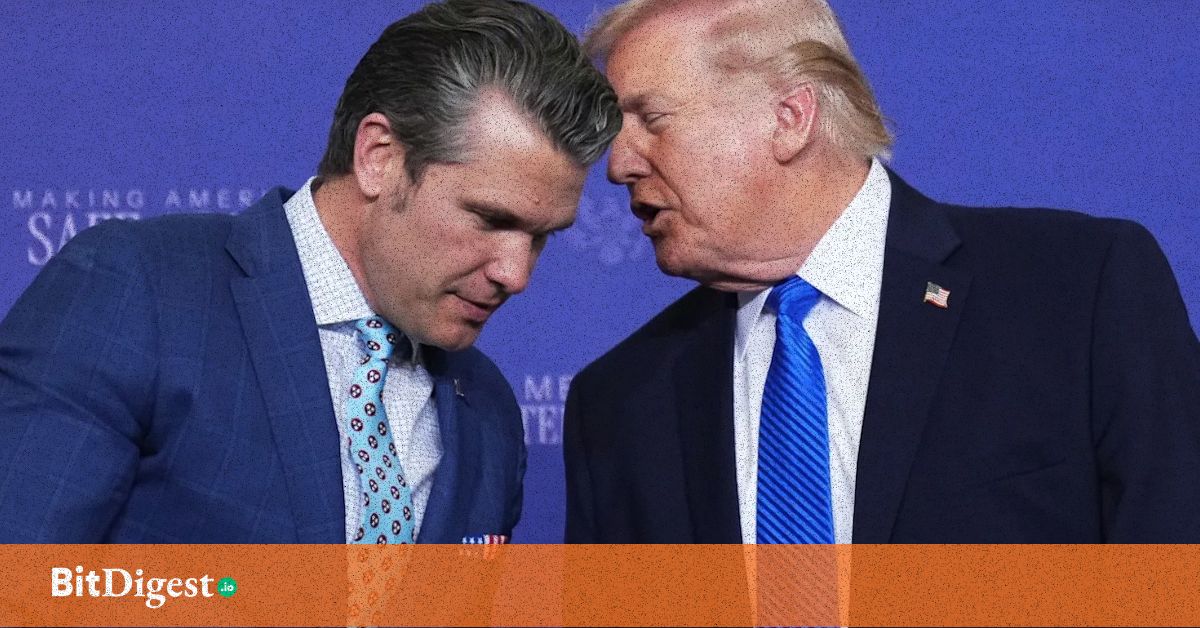
In a March 9 press conference, Trump described the conversations that informed his decision to launch strikes. He named Jared Kushner, Steve Witkoff, Pete Hegseth, and Marco Rubio, but there was no mention of senior active-duty military commanders.
The omission stands out not because it was inferred, but because it came directly from the president’s own recounting. In a decision involving large-scale military engagement and global consequences, the absence of visible military input in that narrative has drawn scrutiny. The administration has since maintained that formal command structures were followed in execution. But the question being raised is different:
Who shaped the decision before the first strike?
The Hegseth Moment
Weeks into the conflict, the narrative shifted. In a later public appearance, Trump singled out Defense Secretary Pete Hegseth as an early advocate for action:
“Pete… you said, ‘Let’s do it.’”
The remark reframed the decision-making dynamic, from a collective discussion to a more pointed attribution of influence. The timing has drawn attention. As the costs of the conflict—both human and economic—have become more visible, the evolution of that narrative has prompted questions about how responsibility is being communicated.
A Narrowing Circle of Influence
This scrutiny is unfolding alongside broader changes inside the U.S. military leadership. Since 2025, several senior officers have been removed or replaced, including top-level commanders. Most recently, the Army Chief of Staff was ousted during ongoing operations. Analysts have described this as a reshaping of the Pentagon’s leadership structure; one that may affect the range of perspectives available during critical decision-making moments.
The administration asserts that operational decisions follow established military channels, however the current debate is not just about execution, but also more about its prior deliberation. In a conflict with global consequences, the expectation is not only that procedures are followed, but that decisions are informed by broad, credible expertise and communicated with consistency. The president’s own shifting descriptions of who influenced the decision have made that expectation harder to evaluate.
As oil markets fluctuate and geopolitical tensions remain elevated, the focus is increasingly turning toward the system behind the decision. Not just whether the strategy succeeds, but whether the process that led to it reflects the level of discipline required for consequences of this magnitude. The global impact of Operation Epic Fury is already being felt. But beyond the immediate effects, a more enduring question is taking shape: When decisions carry worldwide consequences, the world expects clarity on how—and by whom—they are made.
.svg) SHARE TO FACEBOOK
SHARE TO FACEBOOK SHARE TO TWITTER/X
 SHARE TO LINKEDIN
 SEND TO MAIL




.svg)


.svg)