.svg)

.svg)
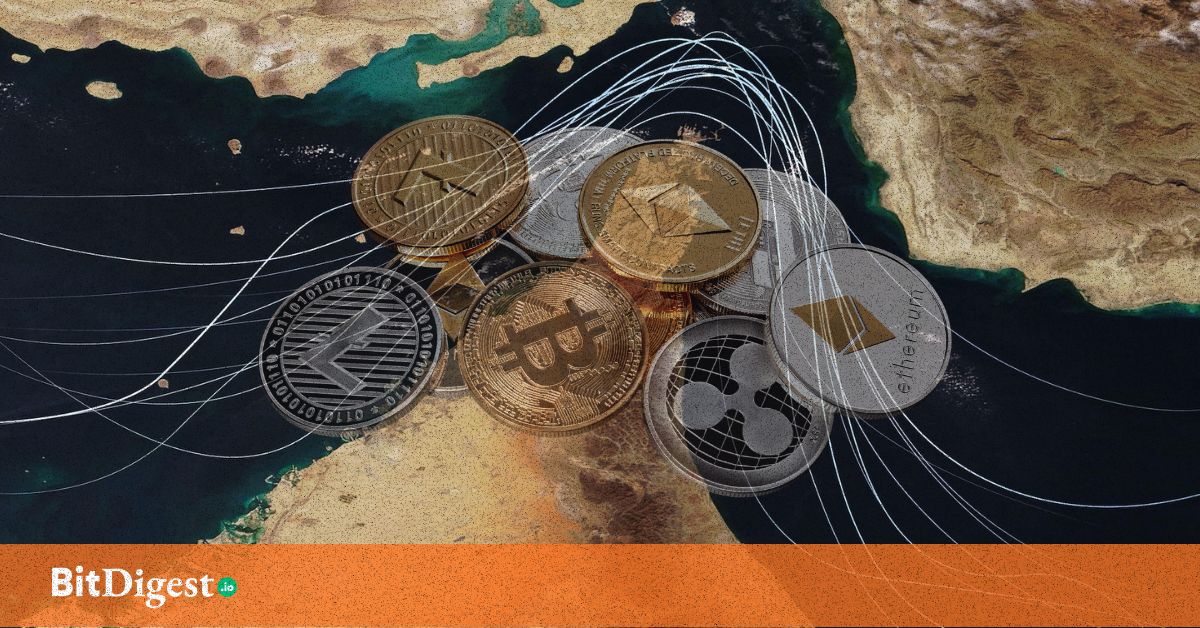
Iran Allows Strait of Hormuz Passage for Select Ships Paying in Yuan and Crypto

Iran is allowing a limited number of ships to pass through the Strait of Hormuz, but only under a tightly controlled system that includes geopolitical vetting and, in some cases, payment in Chinese yuan or cryptocurrencies.
The arrangement, enforced by Iran’s Islamic Revolutionary Guard Corps (IRGC), effectively turns access to one of the world’s most critical energy routes into a selective process rather than open transit. Ships deemed “friendly” or non-hostile can apply for clearance, while others face delays, heightened risks, or denial of passage altogether.
Selective Access, Not Open Passage
The system is not a blanket toll imposed on all vessels. Instead, Iran is screening ships based on ownership, cargo, and geopolitical alignment. Approved vessels are required to submit detailed documentation—including crew lists and cargo manifests—before receiving a transit code. In many cases, they are then escorted through a designated corridor within Iranian territorial waters.
At least some ships have reportedly paid significant fees for safe passage, with transactions conducted in yuan due to sanctions constraints. More recent reporting indicates that stablecoins are also being used as an alternative payment rail.
A Wartime System Shaped by Conflict
The emergence of this system follows the escalation of hostilities involving Iran, the United States, and Israel in late February 2026. Since then, shipping through the strait has dropped dramatically, with some estimates suggesting traffic fell by as much as 90% at the peak of disruption. Despite this, a trickle of vessels—primarily linked to countries such as China, India, and Pakistan—has continued to pass under Iranian approval.
Payments in Yuan and Crypto
The use of yuan and cryptocurrencies is a key feature of the system. By avoiding U.S. dollar transactions, Iran reduces exposure to sanctions while aligning with existing trade patterns, particularly with China. Some vessels have reportedly paid up to $2 million for passage, depending on size and cargo. Stablecoins add another layer of flexibility, enabling faster and less traceable payments in a highly restricted financial environment.
The controlled access regime is already rippling through global markets. With the strait typically handling around 20% of global oil flows, disruptions have pushed energy prices higher and strained supply chains. Shipping costs and insurance premiums have surged, while many vessels remain stranded or rerouted to avoid the region altogether.
Legal and Geopolitical Tensions
Iran maintains that its actions are justified under sovereignty and security concerns during wartime. However, critics argue the system challenges established principles of freedom of navigation under international maritime law.
The situation has prompted growing international concern, with discussions underway among Western and Gulf nations on how to restore unrestricted access to the strait. Iran’s selective passage system marks a shift from disruption to control; using one of the world’s most strategic chokepoints not just as leverage, but as a gatekeeping mechanism tied to geopolitics and alternative financial rails.
.svg) SHARE TO FACEBOOK
SHARE TO FACEBOOK SHARE TO TWITTER/X
 SHARE TO LINKEDIN
 SEND TO MAIL



.svg)


.svg)