.svg)

.svg)
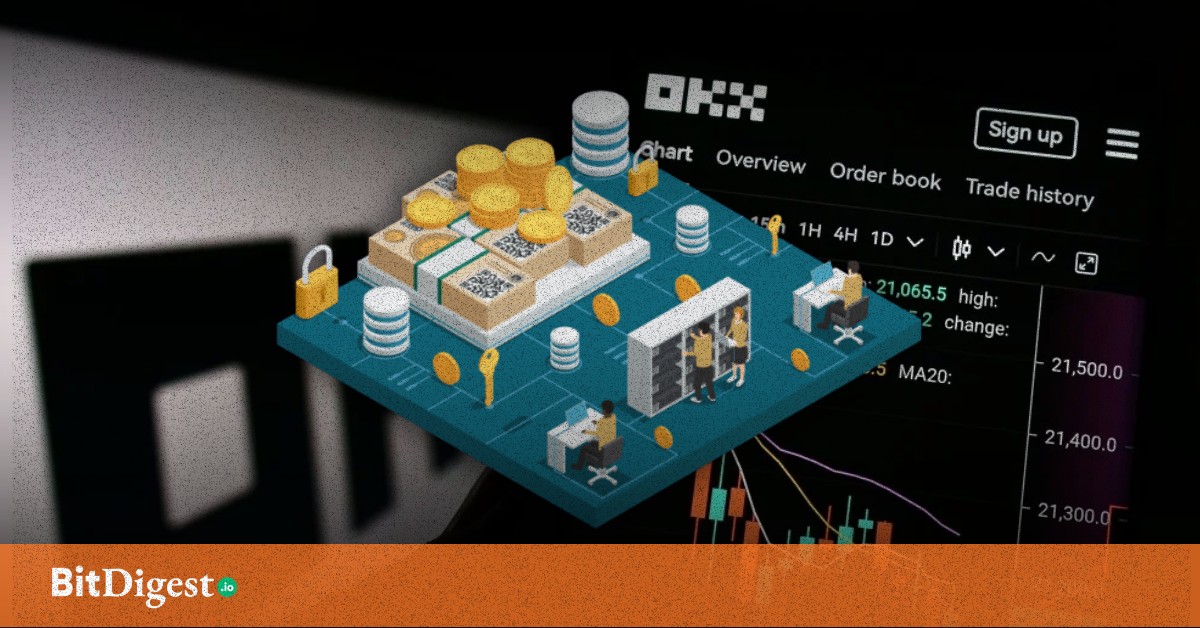
OKX releases its 37th consecutive Proof of Reserves, with over $30B in assets fully backed

Global crypto exchange OKX has published its 37th consecutive monthly Proof of Reserves (PoR) report, reaffirming its commitment to transparency and solvency. The November 2025 report, verified by blockchain security firm Hacken, confirms that user assets are not only fully backed but also overcollateralized—with BTC and USDT at 105%, ETH at 102%, and USDC at 100%. Total primary assets held exceed $30.1 billion.
OKX continues to offer users a publicly accessible Proof of Reserves portal, allowing anyone to verify whether their funds are safely included in the platform’s custody. The exchange uses a Merkle Tree-based audit system, enabling self-verification down to the individual level—without compromising user privacy.
But what does “Proof of Reserves” actually mean for users, and why should it matter to anyone who holds crypto on an exchange?
The Basics: What Are Reserves in Crypto?
In traditional finance, reserves are the assets a bank or institution holds to meet its liabilities. In crypto, it’s a similar concept: reserves represent the actual crypto assets that an exchange has on hand to match what users have deposited. When someone deposits Bitcoin or stablecoins into their account, those funds are expected to be held safely and available for withdrawal at any time.
Proof of Reserves is a method of publicly demonstrating that those funds are indeed available. Using cryptographic techniques, exchanges can show that they hold enough assets to meet all user liabilities—without revealing any individual account details.
Why Proof of Reserves Exists
For years, crypto exchanges operated largely on trust. That trust, however, was shaken by events such as the 2022 collapse of FTX, where billions in customer assets were found to be missing or misused. Without independent transparency, users have no way of knowing whether an exchange is managing their funds responsibly, or if their money is being lent, invested, or rehypothecated behind the scenes.
PoR shifts the burden from trust to verification. It gives users the ability to check whether their balances are part of a publicly provable data set, matched by corresponding reserves on-chain or in verifiable custody accounts.
The Risks of Not Having It
When markets are calm, users may not question where their assets are. But during stress events, withdrawals often surge, and the cracks begin to show. Without PoR, there’s no clear way to know whether an exchange can actually process mass withdrawals, or if insolvency is looming just beneath the surface.
Lack of reserves, or unclear accounting of them, can lead to blocked withdrawals, liquidity freezes, or full-blown collapse. In every major exchange failure in recent memory, lack of transparency around reserves was a key factor. PoR isn’t just a checkbox, it’s a user protection mechanism.
How You Can Verify Funds
Modern implementations of PoR, like that of OKX, use Merkle Trees, a cryptographic structure that allows users to confirm that their balance is included in a total sum without revealing all other data. That means individuals can verify their own funds without needing to trust a centralized audit or third party.
In OKX’s case, the proof is updated monthly and independently verified. Overcollateralization—such as holding 105% of the BTC or USDT needed—adds another layer of assurance.
Crypto continues to mature, but skepticism remains. Proof of Reserves is one way exchanges can rebuild and maintain user trust, especially in regions with weak consumer protections or limited regulatory oversight. At a time when self-custody is gaining traction but centralized platforms still dominate trading activity, verifiable solvency is no longer optional.
Whether you’re holding ₱500 or ₱5 million in crypto, the question should be the same: is it backed?
.svg) SHARE TO FACEBOOK
SHARE TO FACEBOOK SHARE TO TWITTER/X
 SHARE TO LINKEDIN
 SEND TO MAIL


.svg)


.svg)