.svg)

.svg)
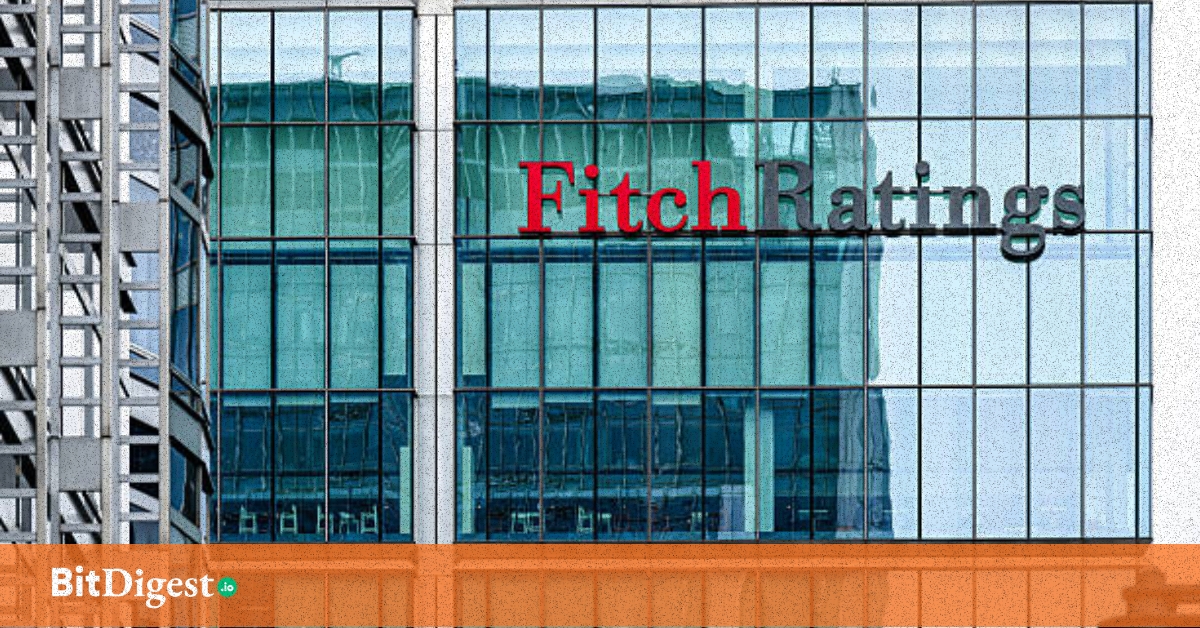
Philippines Keeps BBB Rating as Fitch Turns Outlook Negative on Growth Risks

Philippines retained its investment-grade credit rating after Fitch Ratings affirmed the country’s long-term foreign-currency Issuer Default Rating (IDR) at BBB, but revised its outlook to Negative from Stable on April 20, 2026. The move does not constitute a downgrade but signals a higher likelihood of one over the next 12 to 24 months if current risks persist. Fitch said the Philippines continues to have adequate capacity to meet its financial obligations, but faces mounting near-term pressures on growth, inflation, and fiscal performance.
The outlook revision was driven primarily by two factors: disruptions in public investment and the country’s exposure to rising global energy prices. Fitch pointed to a sharp slowdown in government capital expenditure disbursement in the second half of 2025, linked to investigations into alleged irregularities in flood-control projects. This contributed to weaker economic growth, with GDP expanding by 4.4% in 2025 compared to 5.7% the previous year.
At the same time, the Philippines’ heavy reliance on imported fuel has heightened its vulnerability to the ongoing global oil shock. The government declared a national energy emergency in March 2026 and rolled out targeted subsidies, tax cuts on kerosene and LPG, and fuel-saving measures. While these steps have limited direct fiscal strain, Fitch noted that higher energy costs are still weighing on household spending, inflation, and the country’s external balance.
For 2026, Fitch projects GDP growth at 4.6%, with downside risks if energy prices remain elevated. The general government deficit is expected at 3.7% of GDP, while public debt is forecast to ease slightly to 54.5% of GDP by year-end.
Despite the near-term headwinds, Fitch maintained a broadly positive medium-term view. It cited the Philippines’ strong growth potential—estimated at just above 6%—along with solid foreign exchange reserves of around $106.6 billion and a resilient banking system.
Among major credit rating agencies, Fitch is currently the most cautious. S&P Global Ratings maintains a higher BBB+ rating with a Stable outlook, while Moody’s Investors Service rates the country at Baa2, also with a Stable outlook.
Philippine officials downplayed the revision, describing it as a “cautionary signal, not a downgrade,” and emphasized that the country’s fundamentals remain intact. Bangko Sentral ng Pilipinas Governor Eli Remolona said the economy remains “in a good position.”
For investors, the key takeaway is that the Philippines retains investment-grade status and access to global financing at relatively favorable terms. However, prolonged pressure from high energy costs and delays in infrastructure spending could test that position if not addressed.
Fitch said stabilizing public investment and managing external shocks will be critical in determining whether the outlook returns to Stable, or moves toward a downgrade in the coming years.
.svg) SHARE TO FACEBOOK
SHARE TO FACEBOOK SHARE TO TWITTER/X
 SHARE TO LINKEDIN
 SEND TO MAIL



.svg)


.svg)