.svg)

.svg)
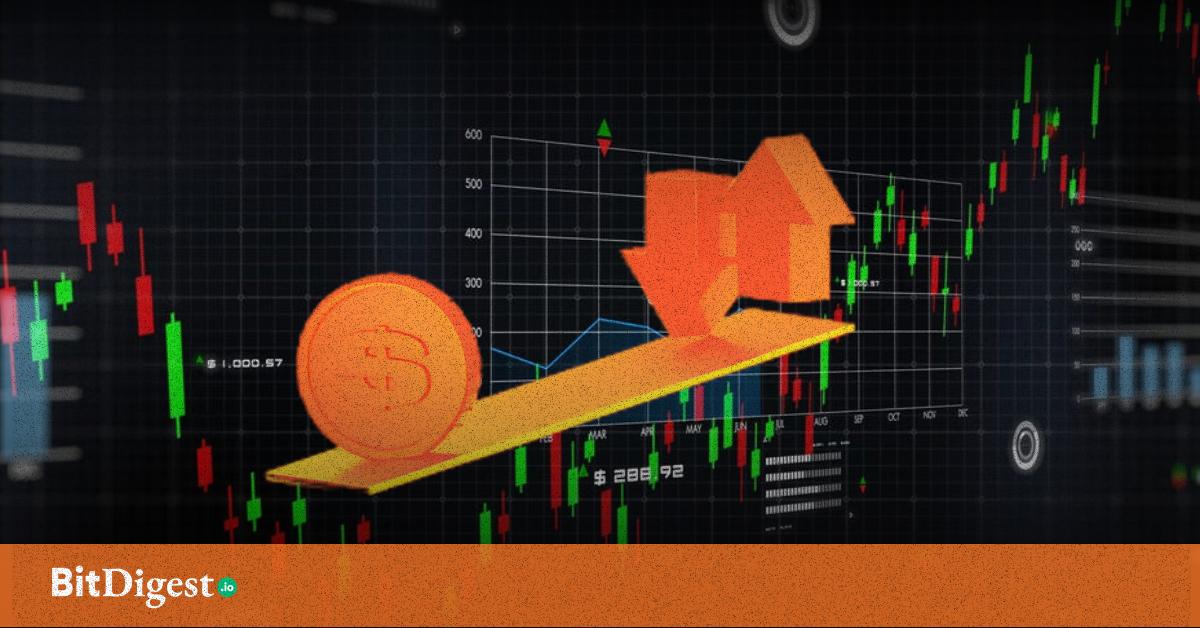
Spot Margin Trading, Explained Simply: How It Works and Why Not Everyone Gets It

In crypto trading, most users operate at two extremes: spot, where you buy or sell only what you can afford, and futures, where you trade contracts with high leverage and higher risk.
But in between lies a less intimidating tool: spot margin trading.
This method lets you borrow funds from platforms like OKX to increase your buying or selling power—without stepping into the complexity of derivatives. It still uses the regular spot market, trading real crypto like BTC or ETH, but adds leverage through borrowing. While this makes it appealing to many, it’s not available to all traders everywhere, and there’s a reason for that.
What Is Spot Margin Trading?
Spot margin trading allows you to borrow crypto or stablecoins from an exchange so you can trade with more capital than you actually hold. If you have $5,000 and want to make a $20,000 trade, you can borrow the remaining amount from the platform—subject to limits—and execute your trade on the same public spot market as everyone else.
Once the trade closes, you repay the borrowed amount with interest. If the trade went well, you pocket the difference. If it didn’t, your losses are also magnified.
The key distinction: unlike futures, this isn’t a synthetic contract. You’re buying and selling real assets, and your trades are placed directly on the standard spot order book.
Why Use It?
Spot margin trading is for users who want more flexibility than pure spot offers, but aren’t ready—or willing—to dive into full-blown derivatives. It’s especially helpful when traders want to increase position size temporarily, or take short positions without entering into futures markets.
One common use is shorting: borrowing BTC, selling it immediately, and hoping to buy it back at a lower price. For traders who want to hedge existing positions or capitalize on short-term price moves, margin trading offers an accessible entry point, using tools they may already be familiar with.
It also acts as a transitional layer—bridging the gap between simple spot trades and more advanced strategies. For users who understand order books but find futures intimidating, margin can be a manageable step forward.
How It Works on OKX
On OKX, margin trading uses the same spot order books as regular trades. For example, a user trading BTC/USDT with a $5,000 balance might enable margin mode and borrow $15,000 to open a $20,000 position.
After borrowing funds, the user places a market or limit order. Once the order is filled, the purchased BTC (or the proceeds of a short sale) is held in a margin account. When the trader decides to exit the position, they repay the loan plus interest using the sale proceeds. Any remaining value—if the trade was successful—is retained as profit.
Importantly, both long and short positions are executed on the standard spot market. There is no separate order book, and users face the same depth, spreads, and execution speed as non-margin traders.
The Risk Layer
Despite the familiar interface, margin trading carries added risk. The biggest concern is liquidation. If your position loses too much value relative to what you owe, the platform can force-close your trade to recover the borrowed funds. This can happen without warning.
There’s also the issue of interest. Borrowing isn’t free. Even if your position is flat, interest accrues over time and can erode profits. Holding a margin position for longer than expected can quietly turn a winning trade into a loss.
Lastly, leverage amplifies both gains and losses. A 5% drop in the market could trigger liquidation if you’re highly leveraged, wiping out your equity. Each trading pair also has its own borrowing limits and risk parameters, which are adjusted depending on market conditions and volatility.
Access Isn’t Universal
Because of the risks, access to spot margin trading is regulated differently across regions.
In Singapore, it’s restricted to Accredited Investors—those who meet specific income or asset thresholds. Even then, the service is provided under OKX Financial, an unlicensed entity operating in higher-risk categories. Users must complete verification and acknowledge that the products are not regulated under local securities laws.
In Europe, access is broader. Eligible users trading on OKX Europe can use up to 10× leverage on select pairs like BTC, ETH, and USDC. The platform also supports cross-margining, allowing traders to use other assets in their portfolio as collateral. Even so, the rollout varies by country, and local rules still dictate how much leverage can be offered and to whom.
When Does It Make Sense?
Spot margin trading makes the most sense for users who have a clear trading thesis, understand the risks, and actively manage their positions. It’s useful for hedging, for scaling up short-term bets, or for building more dynamic portfolios without entering full derivatives markets.
But it becomes dangerous when treated like a shortcut. Misuse—such as applying maximum leverage with no risk plan—can lead to quick losses, especially during volatile periods. It’s a tool, not a guarantee.
Spot margin trading gives users more power, but it also raises the stakes. It offers real advantages to informed traders—more flexibility, a way to short, and a gentler learning curve than futures—but it demands careful monitoring, especially with interest costs and liquidation thresholds always looming.
Platforms like OKX tailor access by region. In Singapore, only qualified investors can use it. In Europe, it’s available more widely, but still shaped by local regulations.
Whether or not margin trading is the right tool depends on your knowledge, your goals, and your appetite for risk. Used wisely, it can expand your trading strategy. Used carelessly, it can quickly become a costly lesson.
.svg) SHARE TO FACEBOOK
SHARE TO FACEBOOK SHARE TO TWITTER/X
 SHARE TO LINKEDIN
 SEND TO MAIL


.svg)


.svg)