.svg)

.svg)
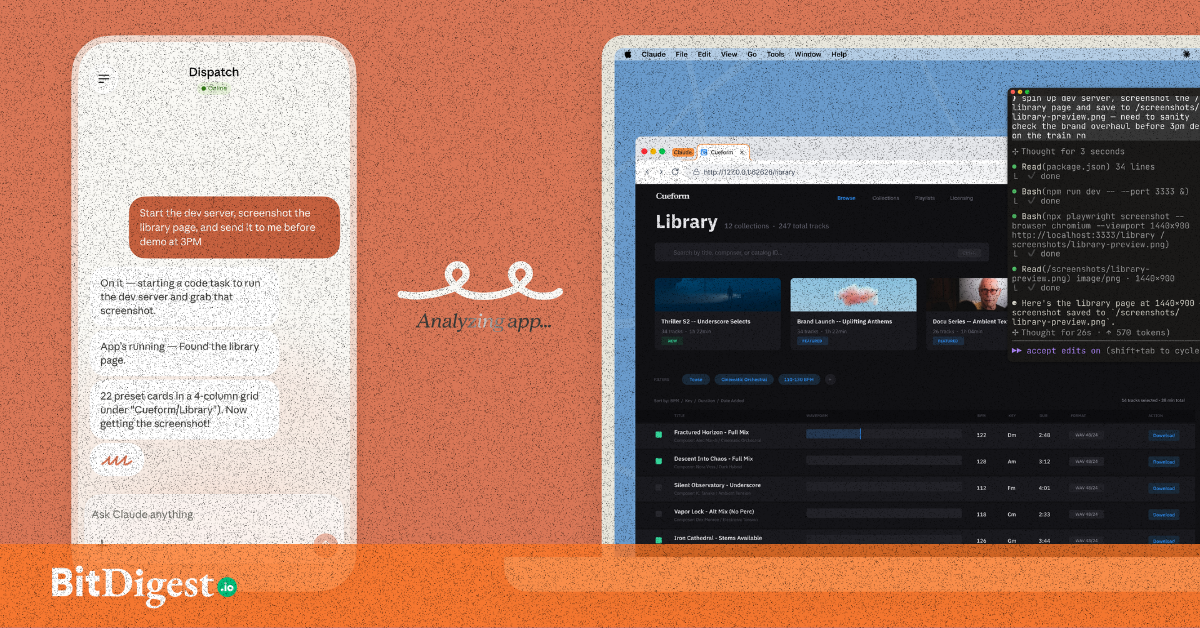
Anthropic Expands Claude with Desktop Control in Push Toward Agentic AI

Artificial intelligence is taking a step beyond chat, and into direct action on users’ computers. Anthropic has introduced a new “computer use” capability for its Claude AI system, allowing the model to control a user’s desktop environment on macOS. The feature enables Claude to open applications, navigate interfaces, and execute multi-step workflows based on natural language instructions. The update, released in March 2026, marks a significant move toward so-called agentic AI; systems designed not just to respond, but to act autonomously on behalf of users.
From Assistant to “Virtual Coworker”
With computer use enabled, Claude can interact with graphical interfaces much like a human would—by interpreting screenshots, moving a cursor, typing inputs, and switching between applications.
Users can assign tasks such as organizing files, processing documents, filling spreadsheets, or sending emails, then monitor progress as the system logs each step in real time. The feature is integrated into Claude Cowork, aimed at general productivity, and Claude Code, designed for developers. Anthropic positions the system as a “virtual coworker,” capable of handling repetitive or time-consuming workflows while users focus on higher-level tasks.
How It Works in Practice
The system operates by combining visual understanding with simulated input. Claude observes the screen, determines the next action, and executes it—repeating the cycle until the task is complete.
This allows it to perform actions across multiple applications without requiring direct API integrations. Tasks can even be assigned remotely through a feature called Dispatch, enabling users to trigger workflows from mobile devices. However, access is tightly controlled. Users must explicitly enable the feature and grant permissions, with Anthropic recommending limited access to trusted apps and non-sensitive data during early use.
Despite its capabilities, the feature remains in research preview and is currently limited to macOS, with broader platform support expected later. Early users have reported occasional glitches and inconsistencies, reflecting the experimental nature of the release. Access is also restricted to paid tiers, including Claude Pro and Claude Max subscriptions. Anthropic has emphasized that human oversight is still necessary, particularly for complex or sensitive tasks.
Security and Risk Considerations
Granting AI control over a desktop environment introduces new security challenges. Potential risks include unintended file modifications, exposure of sensitive data, or manipulation through malicious prompts. Anthropic has advised users to start with sandboxed environments and gradually expand access as confidence in the system improves. These concerns are part of a broader industry discussion around the safety of agentic systems, particularly as they gain deeper access to user environments.
The release reflects a growing trend in AI development: moving from tools that assist users to systems that execute tasks across entire workflows. This shift has implications for traditional software models, especially in enterprise environments where automation could reduce reliance on multiple applications. Earlier discussions around Claude’s productivity features have already sparked debate about the long-term impact on SaaS platforms and knowledge work.
At the same time, analysts note that current AI agents are most effective when guided by clear human intent, serving as amplifiers of productivity rather than replacements for decision-making. As agentic capabilities continue to evolve, tools like Claude’s computer use feature could redefine how people interact with computers—turning instructions into actions with minimal manual input.
For now, the technology remains in its early stages. Its broader adoption will depend on improvements in reliability, security, and cross-platform support, but the direction is clear: AI is moving closer to becoming an active participant in everyday digital work.
.svg) SHARE TO FACEBOOK
SHARE TO FACEBOOK SHARE TO TWITTER/X
 SHARE TO LINKEDIN
 SEND TO MAIL



.svg)


.svg)