.svg)

.svg)
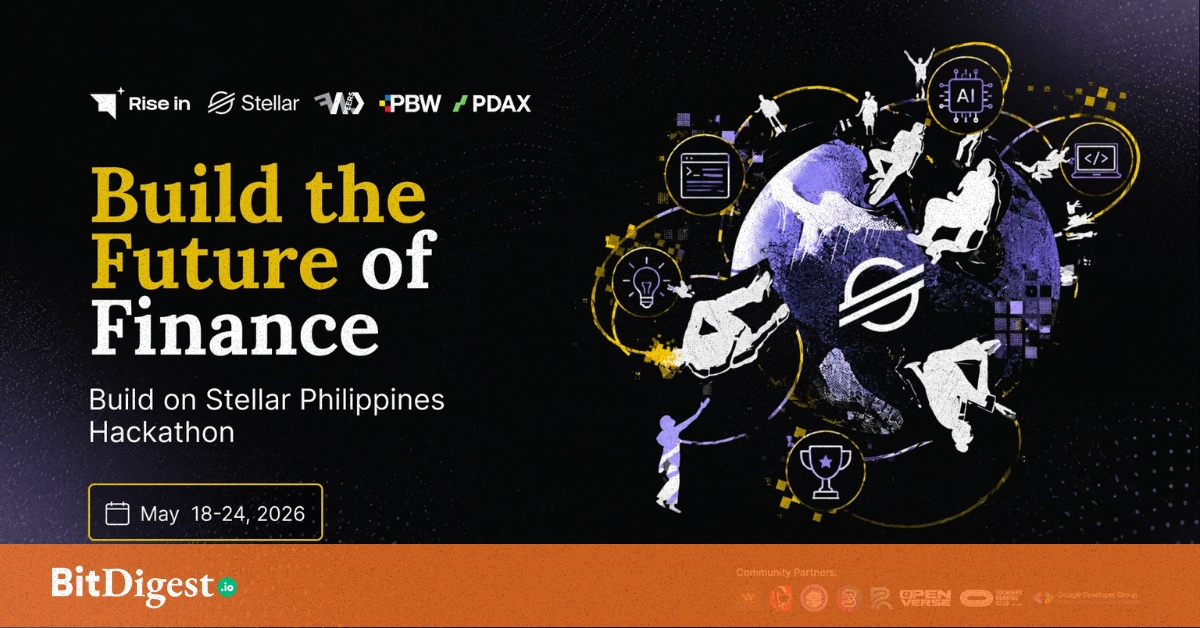
Filipino Builders Are Ready. The Build the Future of Finance Hackathon Proved It.

On May 23, we wrapped up the Build the Future of Finance Hackathon, organized by our team, Stellar Philippines, Rise In. into it, I knew there was talent in the Philippines.
What I didn't know was how quickly people would turn ideas into working products.
Over the course of a week, we saw students, founders, designers, developers, and first-time blockchain builders come together to learn, experiment, and build. Some participants had never deployed a smart contract before. Some had never touched blockchain development at all.
A few days later, many of them were presenting working applications deployed on Stellar Mainnet.
The goal of the hackathon was simple: give Filipino builders the opportunity to learn, experiment, deploy on Stellar Mainnet, and build solutions that address real challenges faced by Filipinos every day.
We ended the week with 165 registrations, more than 70 participants joining the launch session, 32 project submissions, and 28 projects successfully deployed on Stellar Mainnet.
But the numbers are only part of the story.
What stayed with me after Demo Day were the reasons people chose to build what they built.
Almost every team started with a real problem they had personally experienced, witnessed, or cared deeply about solving.
The week kicked off with our opening session where I had the opportunity to welcome participants as Philippine Lead for Stellar Philippines and share our vision for growing the next generation of builders in the country. Throughout the program, participants received technical guidance, mentorship, workshops, and direct exposure to opportunities within the Stellar ecosystem.
This event would not have been possible without the ecosystem partners who believed in the vision from the beginning.
PDAX hosted the in-person Demo Day and opened its doors to the next generation of builders. Philippine Blockchain Week helped amplify the initiative and connect participants to the broader Philippine blockchain ecosystem. Filipino Web Developer Peers, OpenVerse, Founders Running Club PUP, and Google Developer Groups on Campus PUP supported community outreach and helped bring builders into the program.
One of the most rewarding parts of organizing the hackathon was seeing different communities come together around a shared goal: helping more Filipinos build.
The hackathon culminated with an in-person Demo Day hosted at the PDAX headquarters in Manila.
The day opened with welcome remarks from Franz Allan See, CTO of PDAX, who shared insights on the evolving fintech and digital asset landscape in the Philippines. Beyond hosting the event, PDAX also gave participants a glimpse into real-world financial infrastructure and how builders can create solutions that connect with existing financial systems.
One of the highlights for many teams was learning about PDAX's API staging environment and developer access, giving participants the opportunity to explore how future applications could potentially integrate with industry-grade infrastructure.
As one of the Philippines' leading regulated cryptocurrency exchanges, PDAX has played an important role in advancing digital asset adoption in the country. For many participants, presenting inside the offices of a company they have looked up to in the local fintech and crypto space made the experience even more meaningful.
More than just providing a venue, PDAX helped create a bridge between aspiring builders and the broader industry.
By the end of the week, sixteen teams had earned a spot in the finals. Eleven pitched in person at PDAX while five joined remotely online.
Five teams were ultimately recognized during the awarding ceremony:
Champion: AbotPera
1st Runner-Up: PinkRaft
2nd Runner-Up: Axial
Best Use of Stellar: TyFi
Best Use of Stellar: Sobre
What made these projects memorable was not just the technology behind them.
It was the problems they were trying to solve.
Champion: AbotPera
The eventual champion, AbotPera, tackled a challenge that many people living in major cities rarely think about.
What happens when digital payments require internet access, but your community barely has internet at all?
While e-wallets and digital banking have become normal for many Filipinos, millions of people living in rural barangays, island communities, and remote provinces still deal with unreliable or non-existent mobile data connections.
For them, the promise of digital finance often remains out of reach.
The team behind AbotPera decided not to wait for infrastructure to catch up.
Instead, they built around the realities people face today.
Their solution was designed specifically for low-connectivity and zero-data environments, allowing users to access secure digital payments without depending on constant internet access.
What impressed many of us was how clearly they understood the problem.
Financial inclusion is usually discussed in terms of banking access or financial literacy. AbotPera reminded everyone that connectivity is also a barrier.
Their vision was simple: digital money should not only work for people with strong internet connections. It should work for everyone.
1st Runner-Up: PinkRaft
PinkRaft, our 1st Runner-Up, approached a completely different problem.
Instead of focusing on end users, the team focused on builders.
The team, composed of Carl Macabales from Mapua Institute of Technology Makati, Mychal Pejana from FEU Institute of Technology, and Mark Hugh Neri from The Blocklabs Inc., recognized that building programmable payment systems can be intimidating, especially for developers who are new to Soroban and smart contracts.
Their solution uses AI-assisted workflows to help developers design and build Stellar-powered payment architectures more easily.
What I liked about PinkRaft was that it addressed a challenge many builders quietly face.
Sometimes the best way to grow an ecosystem is not by building another application. Sometimes it is by making it easier for the next generation of developers to build their own.
2nd Runner-Up: Axial
The 2nd Runner-Up award went to Axial, a project built by four students from the Polytechnic University of the Philippines who also operate as Axon Enjin, a small software and automation studio serving Philippine businesses.
What stood out about Axial was how closely the team understood the realities faced by local MSMEs.
Many small businesses in the Philippines struggle with delayed payments. Invoices can take 60 to 90 days to get paid, creating cash flow problems that make it difficult for business owners to cover payroll, inventory, and day-to-day operations. At the same time, founders spend countless hours dealing with compliance requirements, tax submissions, and mandatory payroll contributions.
The team saw both problems and asked a simple question.
What if business owners could access capital immediately while compliance happened automatically in the background?
That idea became Axial.
Built on Stellar and Soroban, Axial is a liquidity and compliance engine designed for Filipino MSMEs. The platform allows businesses to unlock working capital from tokenized receivables while automating processes such as BIR submissions and statutory payroll allocations for SSS, PhilHealth, and Pag-IBIG.
What makes the story even more impressive is that the team built a working prototype in just 72 hours.
After receiving the award, the team shared a line that stuck with me:
"Instant capital and invisible compliance is the future Philippine MSMEs deserve."
For a team of students, it was a reminder that some of the most impactful ideas come from builders who understand the day-to-day struggles of the people they are building for.
Best Use of Stellar: Sobre
One of our Best Use of Stellar winners was Sobre.
The idea came from a deeply personal place.
The team grew up in households with OFW relatives and saw firsthand how difficult it can be to maintain transparency around remittances.
An OFW sends money home for groceries, tuition, bills, or family expenses. The money arrives, but there is often little visibility into where it actually goes.
Over time, that lack of transparency can create tension, uncertainty, and mistrust within families.
The team quickly realized this was not just their experience. It is a reality shared by millions of OFW households across the Philippines.
At the same time, they saw how much money is lost through remittance fees, exchange rate spreads, and the inconvenience of traditional transfer systems.
Their answer was Sobre.
Named after the Filipino envelope budgeting practice, where cash is allocated into separate envelopes for different purposes, Sobre brings that familiar system into the digital age. Using stablecoins on Stellar, funds can be automatically allocated into designated categories while giving OFWs greater visibility into how money is being managed.
What I appreciated most was how practical the idea felt.
It was not blockchain searching for a use case.
It was a real problem looking for a better solution.
Best Use of Stellar: TyFi
Another Best Use of Stellar winner was TyFi, built by solo founder Prince Dale of Vertigral Technologies.
Prince shared that he was inspired by the struggles farmers face whenever typhoons strike.
When disasters happen, crops are destroyed, livelihoods disappear overnight, and many farmers are left with little choice but to take on high-interest loans just to survive while waiting for aid or insurance claims.
TyFi explores how blockchain infrastructure can help provide immediate financial assistance during these moments of crisis.
Listening to Prince explain the motivation behind the project reminded everyone that technology is at its best when it helps people during their most difficult moments.
Learning From Builders Who Have Been There Before
One of the highlights of Demo Day was the opportunity for participants to pitch directly in front of leaders from across the Philippine startup, fintech, creative, and web3 ecosystems.
Our judging panel brought together very different perspectives, which made the feedback especially valuable.
Coach Miranda Miner, CEO of GMMG Dubai and one of the country's most recognized crypto educators, challenged teams to think bigger about adoption, sustainability, and long-term impact.
El Bonuan, founder of Maiba Studio and a creative leader working at the intersection of design, gaming, AI, and blockchain, encouraged teams to think deeply about user experience, storytelling, and product design.
Franz Allan See, CTO of PDAX, brought the perspective of someone building financial infrastructure at scale. His feedback pushed teams to think about execution, security, scalability, and what it takes to build products that can operate in real-world financial environments.
Jiro Reyes, Co-Founder and CEO of Bitskwela, shared insights from years of onboarding Filipinos into web3 and helping builders navigate the journey from idea to adoption.
What made the panel special was that they looked beyond the technology itself.
Teams were challenged to think about users, business models, distribution, sustainability, compliance, and how their solutions could create real value outside of a hackathon environment.
For many participants, especially first-time builders, the opportunity to present directly to founders, operators, educators, and ecosystem leaders was just as valuable as the competition itself.
One comment from Coach Miranda Miner stayed with me after the event:
"The future of Web3 in the Philippines is bright because of builders like you."
After spending a week with these teams, I agree.
What made the hackathon special was not just the projects.
It was also seeing different parts of the Philippine ecosystem show up and contribute.
Students, founders, developers, educators, exchanges, community leaders, ecosystem partners, and volunteers all played a role in helping participants succeed.
From PDAX hosting Demo Day, to Philippine Blockchain Week helping strengthen ecosystem visibility, to Filipino Web Developer Peers supporting community engagement, the event became a reminder that meaningful ecosystems are built through collaboration.
Looking back, one of the most rewarding parts of organizing the hackathon was seeing participants move from learning about Stellar on Day 1 to deploying on Mainnet, pitching in front of industry leaders, and exploring opportunities to continue building beyond the event.
Behind the Scenes
While participants were the stars of the week, events like these only happen because of the people working behind the scenes.
A huge part of the hackathon's success came from the Stellar Philippines team.
Our Tech Lead, Armi Obinguar, led the technical side of the program from start to finish. From helping shape the learning experience to supporting participants as they navigated Stellar and Soroban, Armi played a critical role in ensuring builders had the guidance and resources they needed to successfully deploy on Mainnet.
Steve Jimenez, our Ambassador Lead, was instrumental in community growth, partnerships, and business development. From engaging communities and ecosystem partners to helping drive participation throughout the week, Steve worked tirelessly to bring builders and opportunities together.
Our intern developer mentor, Carl Aldrey Bergado, spent countless hours supporting teams throughout the hackathon. Whether it was debugging issues, answering technical questions, reviewing implementations, or helping participants overcome roadblocks, Carl was always there when builders needed help.
What many people see on Demo Day is only a small part of what goes into organizing a hackathon.
Behind every project submission, workshop, deployment, mentorship session, and community event is a team committed to helping builders succeed.
I'm incredibly grateful to Armi, Steve, Carl, our mentors, volunteers, judges, speakers, and partners who dedicated their time and energy to making this event possible.
Hackathons like these only work because experienced builders and ecosystem leaders are willing to invest in the next generation.
For me, that was the biggest takeaway from the week.
Filipino builders do not lack talent.
What they often need is access, mentorship, community, and an opportunity to start.
Over the course of one week, we saw students deploy their first smart contracts, founders turn personal experiences into products, and builders discover that they could create solutions with real-world impact.
More importantly, we saw what becomes possible when an ecosystem comes together around a shared mission.
The Build the Future of Finance Hackathon may have ended on May 23, but for many participants, this was just the beginning.
Several teams are already preparing for the upcoming APAC Stellar Hackathon. Others are exploring grants, continuing development, and looking for ways to bring their ideas to market.
If this week proved anything, it is that the Philippines has no shortage of talented builders.
The future is already being built.
And more Filipino builders are stepping up to help shape it.
.svg) SHARE TO FACEBOOK
SHARE TO FACEBOOK SHARE TO TWITTER/X
 SHARE TO LINKEDIN
 SEND TO MAIL


.svg)


.svg)