.svg)

.svg)
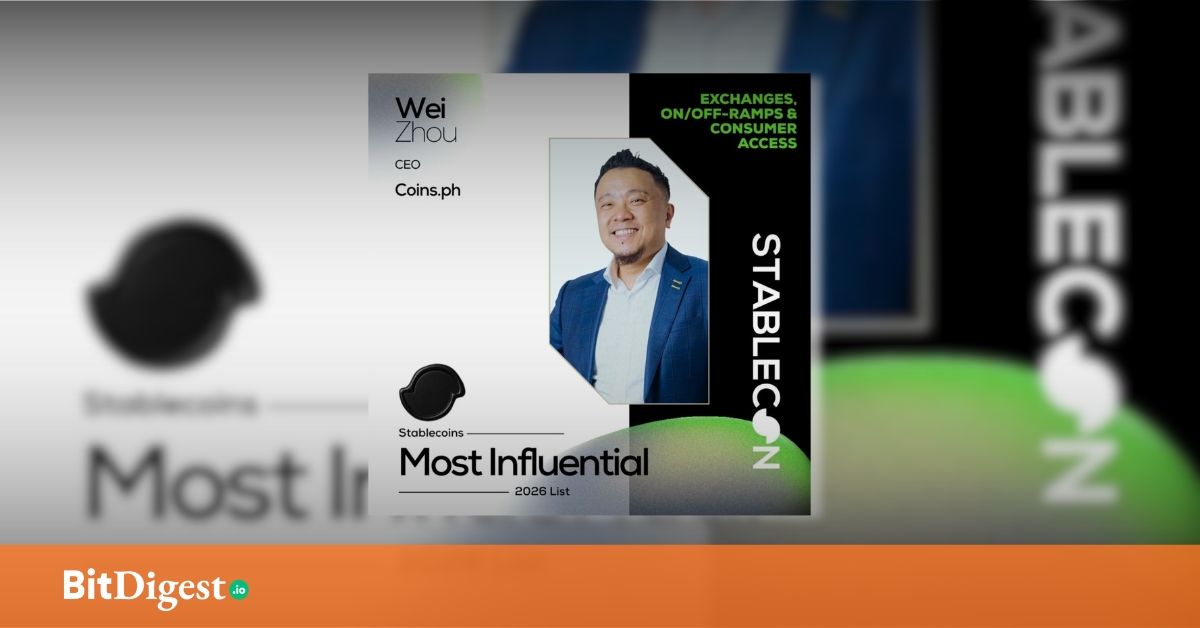
How Stablecoins Give Filipinos a More Direct Path to the Global Economy
The Philippines has never lacked people willing to work for a global audience. Filipinos have built careers in outsourcing, freelancing, creative services, technology, and countless other industries that serve customers far beyond the country’s borders.
What has been more difficult is moving the money. A freelancer can work for a client in another country, deliver the work instantly, and still wait days for payment to arrive. A small business can sell its services overseas but lose a meaningful portion of its earnings to transaction fees and foreign exchange costs. For some workers and businesses, 4%, 6%, or even 8% of an international payment can disappear before the money reaches them.
That is a significant cost when the objective is simply to get paid for work that has already been done. Stablecoins offer a different way of thinking about this problem.
Rather than treating blockchain as something primarily associated with cryptocurrency trading, it is more useful to look at it as financial infrastructure. A stablecoin is, at its simplest, money on a blockchain. It takes the value of a familiar currency such as the U.S. dollar and places it on a public digital ledger that can be accessed around the world.
The Philippines has a structural advantage in the global digital economy. Its language, culture, adaptability, and deep experience serving international customers have created a workforce that can compete globally without necessarily leaving the country.
A new generation of Filipinos can work for overseas companies without physically relocating overseas. A designer in Manila can serve a company in New York. A developer in Cebu can build for a customer in London. A small BPO in Davao can support a business in California.
The economic opportunity is enormous, but the financial infrastructure supporting that work was largely designed for a different world.
Traditional cross-border payments often involve banks, correspondent institutions, payment processors, foreign exchange conversions, and settlement periods that were built around geographic boundaries. The internet removed many of those boundaries for work and commerce, but money still has to navigate them.
Stablecoins can help close that gap. With a regulated platform such as Coins.ph, an individual or business can receive USDC or USDT from an overseas client without having to manage a private wallet, hardware device, or complicated blockchain infrastructure.
Stablecoins as payment infrastructure
Traditional banks, e-wallets and card networks already move money across private ledgers. Blockchain introduces a different model: a public ledger that allows value to move digitally across borders without requiring every participant to operate on the same private system.
That makes stablecoins particularly interesting for international payments.
The technology itself is not the point, rather it is what the technology allows people and businesses to do.
A payment that previously required several intermediaries can potentially move directly from one participant to another. A business can receive dollars digitally, hold those dollars as USDC, or convert them into pesos when needed.
For Filipinos earning in global markets, that flexibility has practical value. It can mean lower payment costs. It can mean faster access to earnings. It can also give people greater control over when they convert foreign currency into pesos, rather than forcing every international payment through an immediate conversion.
How regulation makes the infrastructure usable
People need to know where their money is held, how it is protected, what happens when something goes wrong, and who is accountable. That is particularly important when stablecoins move from trading into everyday financial activity.
Coins.ph has operated under Bangko Sentral ng Pilipinas oversight for almost a decade. It was among the country’s first licensed virtual currency exchanges and also operates as a licensed Electronic Money Issuer.
That regulatory framework matters because the goal is not simply to make stablecoins technically accessible. It is to make them accessible within a financial system where users can have confidence in the institutions providing the service.
One of the biggest misconceptions around stablecoins is that adoption requires everyone to become a crypto expert: memorizing a 12-word recovery phrase, managing private keys, or carrying a hardware device.
That should not be the expectation for mainstream adoption. The technology can remain complicated underneath while the consumer experience becomes simple on top.
That is how most financial infrastructure works. People use payment cards without understanding card-network architecture. They use e-wallets without thinking about the underlying ledger. Stablecoins should be no different.
Opportunity for smaller businesses
Cross-border payments are only one part of the opportunity. The same infrastructure can change how smaller businesses participate in the global economy.
Today, international commerce often favors companies that have the scale and banking relationships to manage complicated payment flows. Smaller businesses can face disproportionate costs simply because they are moving smaller amounts of money.
A Filipino freelancer should not need the same financial infrastructure as a multinational corporation simply to receive payment from an overseas customer. The same applies to small BPOs, exporters, online businesses, creators, software companies, and other globally distributed teams.
This could become increasingly important as the structure of work changes.
Nevertheless, stablecoins should not be viewed as a replacement for banks, cards, e-wallets, or existing financial institutions. The more useful question is where they solve a problem that existing systems have struggled to solve efficiently. Cross-border payments are one obvious example.
For a Filipino receiving a dollar payment from abroad, the difference between losing several percentage points to fees and receiving almost the full value can directly affect take-home income.
For a small business, faster settlement can improve cash flow. For an overseas worker or freelancer, being able to hold dollars digitally and convert them into pesos when needed can provide another layer of financial flexibility.
These are not abstract blockchain use cases. They are ordinary financial problems that the technology simply provides another way of solving.
A more connected Filipino economy
The Philippines does not need to become a global financial center overnight to benefit from this transition.It already has something arguably more important: a workforce capable of participating in the global economy at scale.
The opportunity now is to give that workforce financial infrastructure that is as global as the work itself. Stablecoins can become one part of that infrastructure.
As regulation develops in the United States, Europe, Hong Kong, Japan and other major markets, stablecoins are increasingly moving toward recognition as legitimate financial products rather than being treated solely as extensions of the cryptocurrency market.
That creates an opportunity for countries like the Philippines. A freelancer should be able to work for the world without having to build a complicated financial system just to get paid.
A small Filipino business should be able to serve an overseas customer without losing a significant part of its revenue simply because the payment crossed a border. And the next generation of Filipino companies should be able to participate in a digital economy where work, commerce and money can move at the same speed.
That is ultimately where stablecoins can matter most: not as another asset to trade, but as a simpler way for people and businesses in the Philippines to connect financially with the rest of the world.
.svg) SHARE TO FACEBOOK
SHARE TO FACEBOOK SHARE TO TWITTER/X
 SHARE TO LINKEDIN
 SEND TO MAIL


.svg)


.svg)