.svg)

.svg)
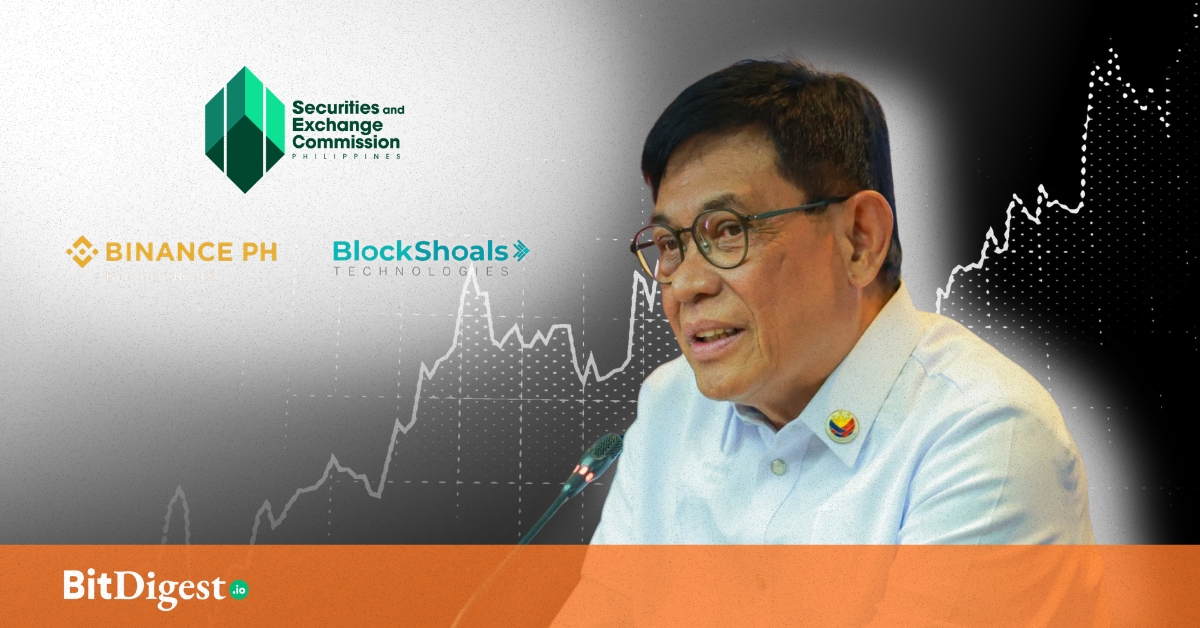
SEC Chairperson Francis Lim Defends BlockShoals Admission to Strategic Sandbox

The Philippine Securities and Exchange Commission (SEC) Chairperson Francis Lim has defended the regulator’s decision to admit BlockShoals Technologies Inc., a Binance-linked local firm, into its Strategic Sandbox, stressing that participation is meant to test new financial models rather than guarantee their eventual approval.
Lim said the SEC should remain open to financial innovation while relying on actual testing and data to determine whether new products and business models can operate safely within the Philippine market.
“We do not approve innovation only because it is new. Neither do we reject it because it is unfamiliar,” Lim said in remarks reported on Aug. 26.
His comments come amid questions surrounding BlockShoals’ admission into the SEC’s Strategic Sandbox, particularly given its partnership with global cryptocurrency exchange Binance and the regulatory requirements surrounding crypto-asset services in the Philippines.
Sandbox entry is not approval
At the center of Lim’s defense is the SEC’s distinction between testing a financial innovation and approving it for commercial use.
Under the Strategic Sandbox framework, companies can test innovative financial products and services under regulatory supervision. The process allows the SEC to gather information on how a model works in practice, assess potential risks and determine what regulatory requirements may be appropriate.
For BlockShoals, admission into the sandbox means the SEC can evaluate its proposed crypto-asset intermediary model in a controlled environment.
It does not mean BlockShoals has already received permission to offer its services broadly to the public.
Lim emphasized that outcome is still uncertain.
“Once they [are] admitted to the sandbox, it may or may not happen, diba? But we have to test. Titignan namin data… Titignan namin appropriate regulation,” he said.
In other words, the regulator is not treating sandbox participation as a regulatory endorsement. It is treating it as a way to gather evidence before deciding what comes next.
SEC Commissioner Rogelio Quevedo made the same distinction more explicitly, saying that sandbox participation is “not an excuse” or a shortcut toward SEC approval.
The company would still have to go through the relevant regulatory process, while any violations committed before or during participation would remain subject to applicable penalties.
What BlockShoals is actually testing
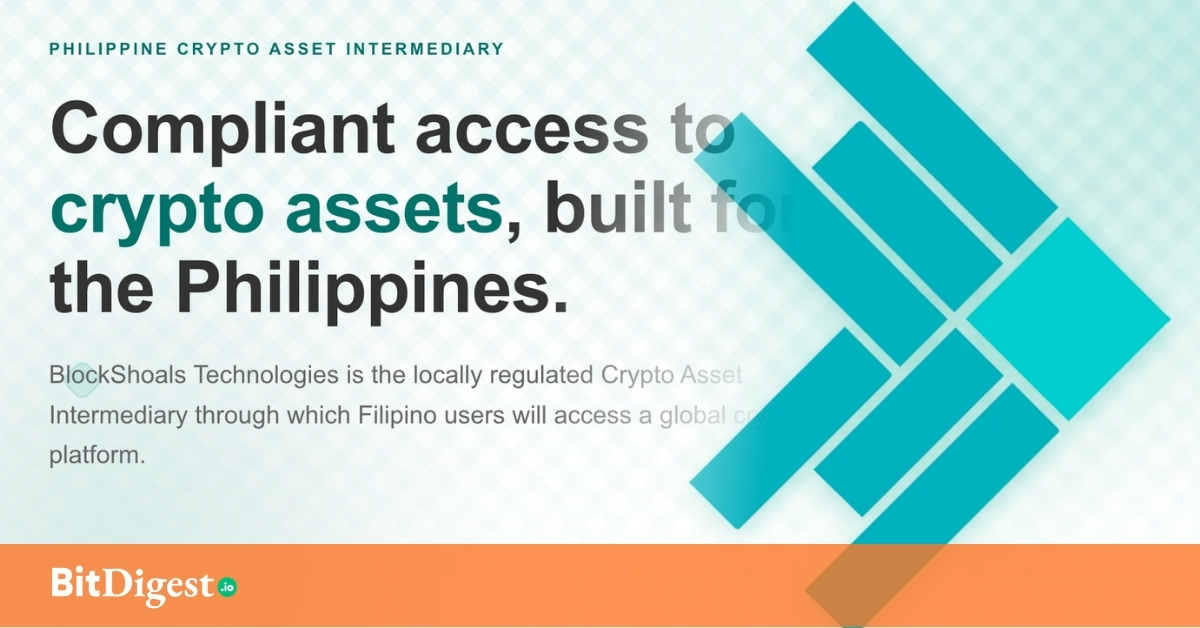
BlockShoals was admitted as a Crypto Asset Intermediary under the SEC’s Strategic Sandbox framework and is intended to serve as the local regulated entity for the proposed model.
Binance, meanwhile, is providing technology, security and operational support.
But the arrangement does not give BlockShoals or Binance unrestricted access to the Philippine market.
The SEC previously clarified that the initial 90-day phase was limited to technical systems integration with a Bangko Sentral ng Pilipinas (BSP)-licensed Virtual Asset Service Provider for peso on- and off-ramp services.
That means the initial phase is about making the technical infrastructure work, rather than allowing public onboarding, trading or full commercial operations.
This distinction is particularly important because sandbox participation under the SEC does not replace separate BSP requirements for activities that fall under the central bank’s regulatory authority.
BlockShoals has selected a BSP-accredited VASP partner and is completing due diligence as the technical integration phase progresses.
Lim says regulators should not close the door on innovation
Lim’s comments also reflect a broader position on how financial regulators should approach rapidly changing technology.
Rather than deciding immediately that a new financial model is either acceptable or unacceptable, he argued that regulators should allow controlled experimentation and use the resulting information to determine the appropriate rules.
“I think we’re in the midst of global innovation,” Lim said.
That approach is particularly relevant to blockchain-based financial products, where technology can change faster than existing regulatory frameworks.
The SEC’s sandbox therefore gives the regulator a way to observe these models without immediately giving them unrestricted market access.
Lim also pointed to tokenization as another area where the regulator could explore potential applications of blockchain technology.
“Why not tokenize our shares of stock?” he said, arguing that dividing high-value shares into smaller digital units could potentially make them accessible to more investors.
“Tokenize it. Unitize it. That can generate more market participants.”
The comments suggest that the SEC’s openness to blockchain innovation is not limited to cryptocurrency trading. Tokenization of traditional financial assets could also become an area for controlled experimentation.
A long road from testing to approval
The sandbox process is also unlikely to be an overnight exercise.
Lim noted that in other jurisdictions, including Singapore, it can take considerable time for an innovation to progress through a regulatory sandbox.
He cited periods of around two years before a participant can graduate from such a framework.
For BlockShoals, this means the current technical integration should not be interpreted as an indication that a fully operational Binance-linked crypto platform is imminent.
The regulator still needs to examine the results of testing, assess risks and determine what rules would be necessary before any broader authorization could be considered.
That also leaves open the possibility that the model may ultimately require changes, face additional conditions or fail to receive approval.
The Binance connection remains a key regulatory consideration
BlockShoals’ relationship with Binance adds another layer to the discussion.
BlockShoals is the Philippine-incorporated entity participating in the SEC sandbox, while Binance is providing technical and operational support.
The arrangement allows the SEC to examine how such a structure could function within Philippine regulatory requirements.
But it does not erase the distinction between the two entities or automatically resolve regulatory obligations that may apply to activities under the BSP’s jurisdiction.
For the SEC, the sandbox provides a controlled setting in which those questions can be examined using actual operational data rather than assumptions.
That is also why Lim’s defense of the admission does not amount to a defense of any particular business model or company.
It is a defense of the regulatory process used to evaluate it.
What the SEC’s position signals
Lim’s remarks point to a regulatory approach that seeks to avoid two extremes: allowing new financial technologies into the market without sufficient safeguards, or rejecting them simply because existing rules were not designed around them.
The Strategic Sandbox sits between those positions.
It allows the regulator to observe how an innovation works, identify potential risks and consider what regulatory framework may be appropriate before deciding whether it should move beyond testing.
For BlockShoals, that means the important development is not that it has secured a green light for commercial operations.
It is that the SEC has decided the proposed model is worth examining under controlled conditions.
Whether it eventually moves beyond the sandbox will depend on what the testing shows.
For now, Lim’s message is that innovation can be tested without being automatically approved—and that regulators need evidence before deciding where new financial technology belongs within the Philippine market.
.svg) SHARE TO FACEBOOK
SHARE TO FACEBOOK SHARE TO TWITTER/X
 SHARE TO LINKEDIN
 SEND TO MAIL


.svg)


.svg)