.svg)

.svg)
Smarter Trading How Unified Portfolios Maximize Every Dollar

As digital asset trading platforms expand beyond simple spot markets, a new focus is emerging around capital efficiency—how traders deploy and maximize the productivity of their assets across multiple strategies.
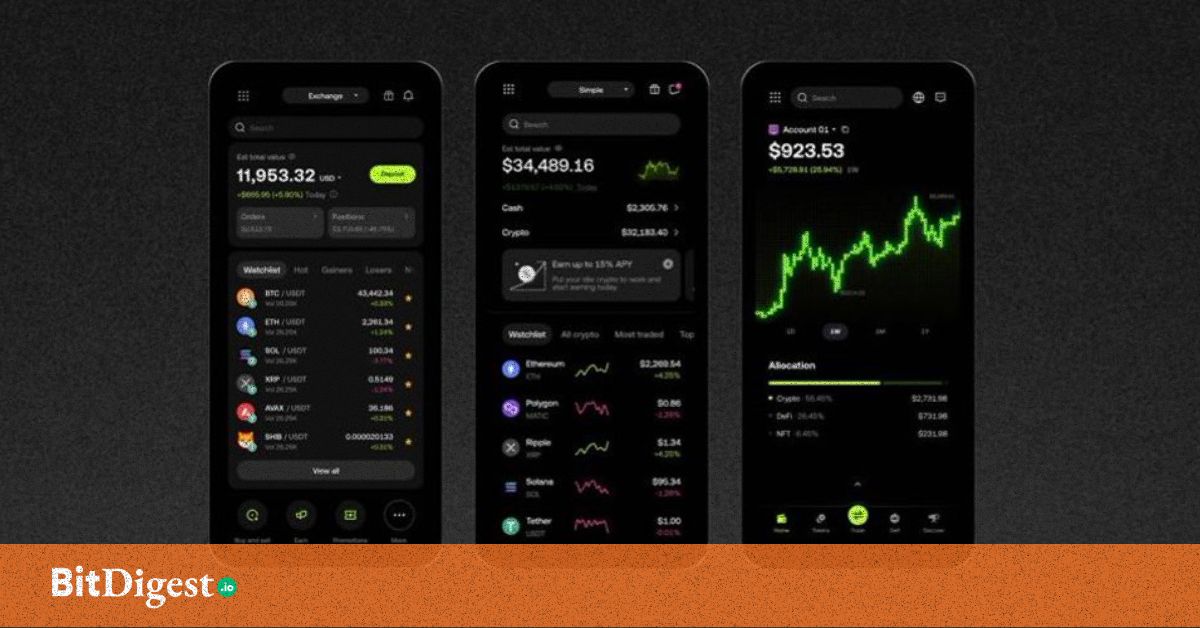
Modern crypto exchanges are increasingly designing systems that allow users to trade, earn yield, and manage risk from a single integrated portfolio, rather than juggling multiple accounts or transferring funds between trading products.
One example is the unified trading architecture introduced by OKX, which integrates products such as equity perpetual contracts, crypto derivatives, spot markets, and yield-generating balances within a single account structure.
The goal is to provide retail traders with tools that more closely resemble the capital-efficient systems traditionally used by institutional investors and prime brokerage desks.
Unified Portfolio Management
Traditional trading platforms often separate products into different accounts—spot trading, derivatives, margin accounts, and yield products may all exist in separate wallets.
This structure can create friction when traders need to move funds between products or manage multiple collateral pools.
Unified account architectures attempt to simplify this process.
Under a unified system, traders can manage crypto assets, derivatives positions, and yield balances within a single portfolio, allowing capital to move dynamically across strategies without manual transfers.
This structure enables traders to allocate capital more efficiently while maintaining visibility over their entire portfolio in one interface.
Cross-Asset Collateral
Another feature of unified trading models is cross-asset margining, which allows multiple assets to serve as collateral for trading positions.
Instead of funding each position separately with a single currency, traders can use a portfolio of assets—including cryptocurrencies such as Bitcoin and Ether, as well as stablecoins like Tether—to support margin requirements.
This approach offers several advantages: improved capital utilization, reduced idle balances across accounts, and lower risk of isolated liquidation events.
By spreading collateral across a diversified portfolio, traders may have more flexibility when managing leveraged positions.
Portfolio Margin Efficiency
Unified trading systems can also enable portfolio margin modes, where the entire portfolio is evaluated collectively to determine margin requirements.
In traditional financial markets, similar mechanisms are used by prime brokers and institutional trading desks to improve capital efficiency.
Instead of assessing risk on a per-position basis, portfolio margin models consider the overall exposure and diversification of the account, potentially reducing margin requirements for balanced portfolios.
For active traders operating across multiple asset classes, this structure can create greater flexibility when managing risk.
Combining Yield and Trading
One of the more distinctive features of crypto-native trading systems is the ability to combine yield generation with active trading strategies.
Certain balances held within trading platforms may generate passive returns through savings or staking products while simultaneously serving as collateral for trading.
Within OKX’s ecosystem, assets allocated to yield programs—such as those available through OKX Earn—can also support trading positions in derivatives markets.
This approach allows traders to maintain passive income on idle balances while deploying capital for leveraged trades.
The concept is sometimes described informally as “double-dip” capital utilization, where the same pool of assets performs multiple financial functions simultaneously.
Leverage for Equity Perpetuals
The integration of equity perpetual contracts into unified portfolios introduces new strategies that combine traditional market exposure with crypto trading mechanics.
Leverage for stock-linked perpetual contracts typically ranges from 0.01× to 5×, a relatively conservative level compared with the much higher leverage often available in cryptocurrency derivatives markets.
This lower leverage range reflects the goal of balancing opportunity with risk management, particularly when dealing with traditional equity benchmarks.
Traders can choose between several margin modes and order types, including:
- cross margin and isolated margin
- one-way and hedge position modes
- a full range of order execution options.
Built-In Risk Controls
Like other derivatives instruments, equity perpetual contracts involve several risk management mechanisms.
Funding rate systems periodically transfer payments between long and short positions, helping keep derivative prices aligned with underlying market benchmarks.
Mark prices—reference prices used for liquidation calculations—also help prevent market manipulation and reduce the risk of forced liquidations triggered by short-term price spikes.
However, derivatives trading still carries significant risks.
Because equity perpetual contracts are synthetic instruments rather than actual shares, traders do not receive dividends or shareholder rights.
They also remain exposed to: funding rate costs, market volatility, and potential liquidation if leverage amplifies losses.
Toward More Productive Capital
As trading platforms evolve, the concept of capital productivity—ensuring assets remain actively deployed rather than idle—is becoming a central design principle in digital finance.
Unified portfolio systems aim to create environments where traders can manage multiple strategies simultaneously, blending derivatives, spot assets, and yield products within a single ecosystem.
For many users, the result is a more flexible trading environment where capital can be deployed dynamically across crypto markets and traditional financial exposure.
In an increasingly interconnected financial landscape, platforms that maximize capital efficiency may play a growing role in shaping the next generation of digital trading infrastructure.
.svg) SHARE TO FACEBOOK
SHARE TO FACEBOOK SHARE TO TWITTER/X
 SHARE TO LINKEDIN
 SEND TO MAIL


.svg)


.svg)